A conversation with Natsumi Kawabata about Cambodian rice, making something delicious, learning to trust other people, and leaving room for the next experiment.
In conversation
Natsumi Kawabata 河端 菜摘
Work
Fungi Art Brewery COO / CTO
Place
Phnom Penh
Reading time
About 17 minutes
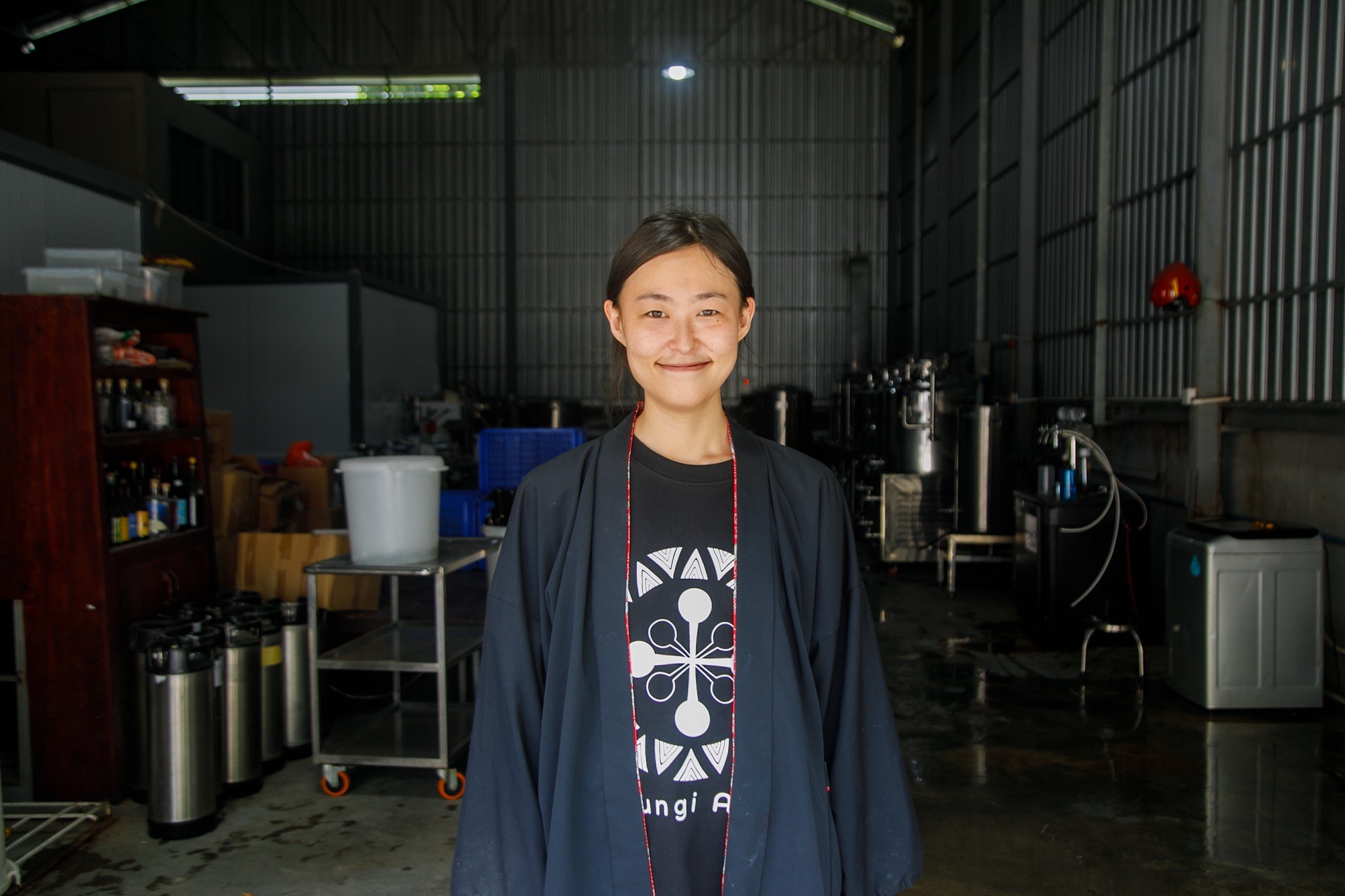
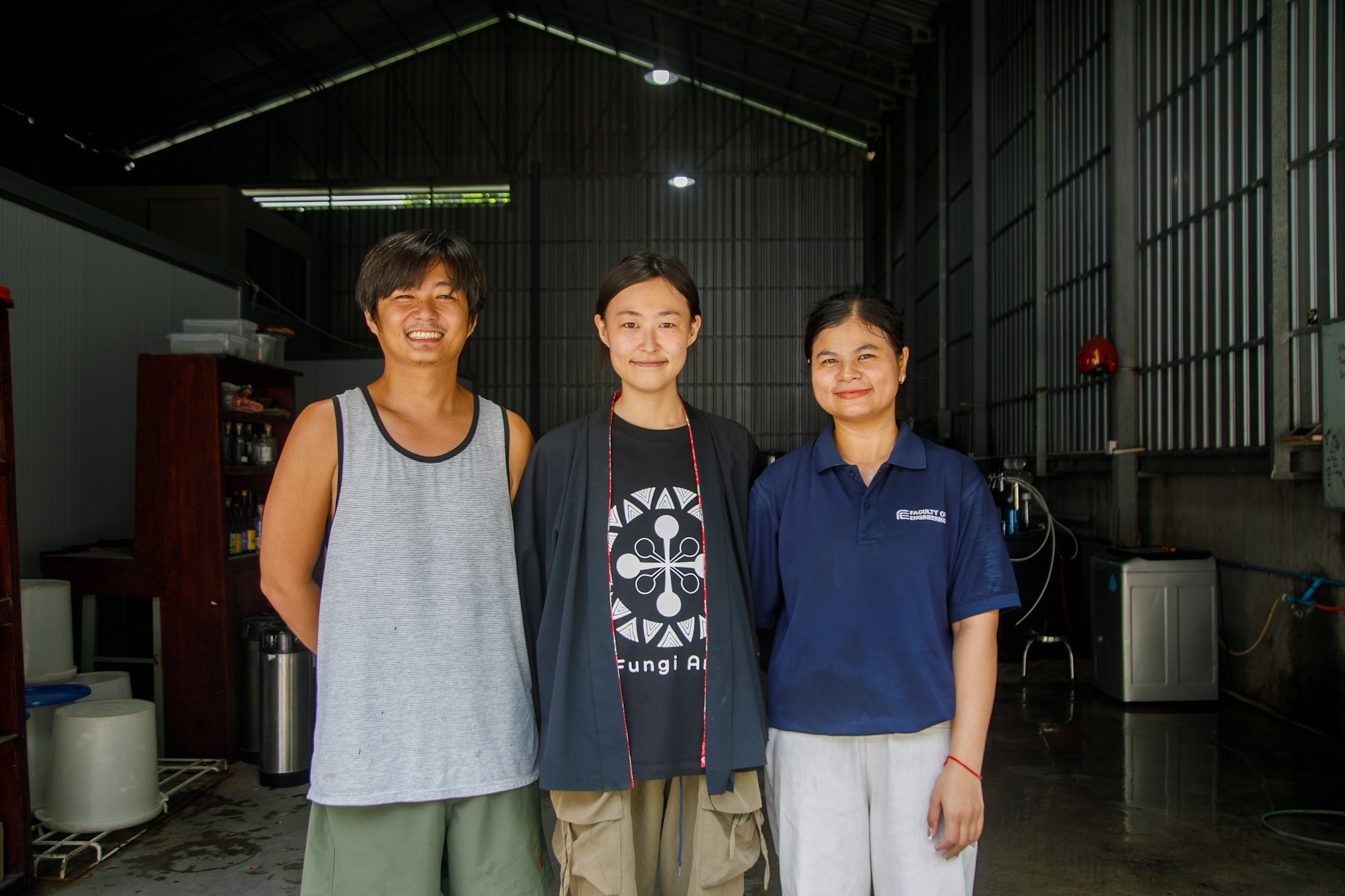
Natsumi at the entrance to the factory.
Why I wanted to meet Natsumi
I knew Natsumi as someone who made sake. When I visited Fungi Art Brewery in Phnom Penh, she began by telling me that the work was also about making food from rice, and researching fuel that could one day help fly aeroplanes. I had a lot more to ask.
Natsumi Kawabata, or Natchan, works across research, production and the running of the brewery. Fungi Art is the Cambodian subsidiary of Agro Ludens, led by Kiyotaka Saga. There are drinks being made and sold here now, and other ideas still being tested. I wanted to understand how she had found her way into all of it.
We talked about the years behind a finished bottle, what happens when the electricity stops, and the first time she trusted a colleague to make sake on his own. We also talked about what it means to want to work alongside someone, and discover that you want different things.
01 / Something she actually liked
Take
What first brought you to Cambodia, and how did you find your way to making sake?
Natsumi
I had been interested in fair trade since I was a teenager. I read a book by Eriko Yamaguchi of Motherhouse and thought, this is what I want to do. I kept telling people about it, and someone I knew brought me to Cambodia.
As I travelled around, I thought I wanted to make things here. But how could I understand the place without living here? Then someone was opening a bar and asked whether I would run it. So I started with an oden bar.
People came in and suggested different things I could make. I tried things like silk hats, but nothing really clicked. I kept wondering why. Eventually I realised that I could not keep making and selling something unless I liked it myself.
I do not have much desire to buy things. When I looked at where my money went, it was alcohol, cigarettes and books. I did not know how to make tobacco, and books did not quite fit what I was trying to do. Then I thought, alcohol!
I had seen people communicating over drinks. I felt that drinking in moderation could make people happy. And Cambodia had all this rice. I was Japanese. So I thought I would make sake.
“I could not keep making and selling something unless I liked it myself.”
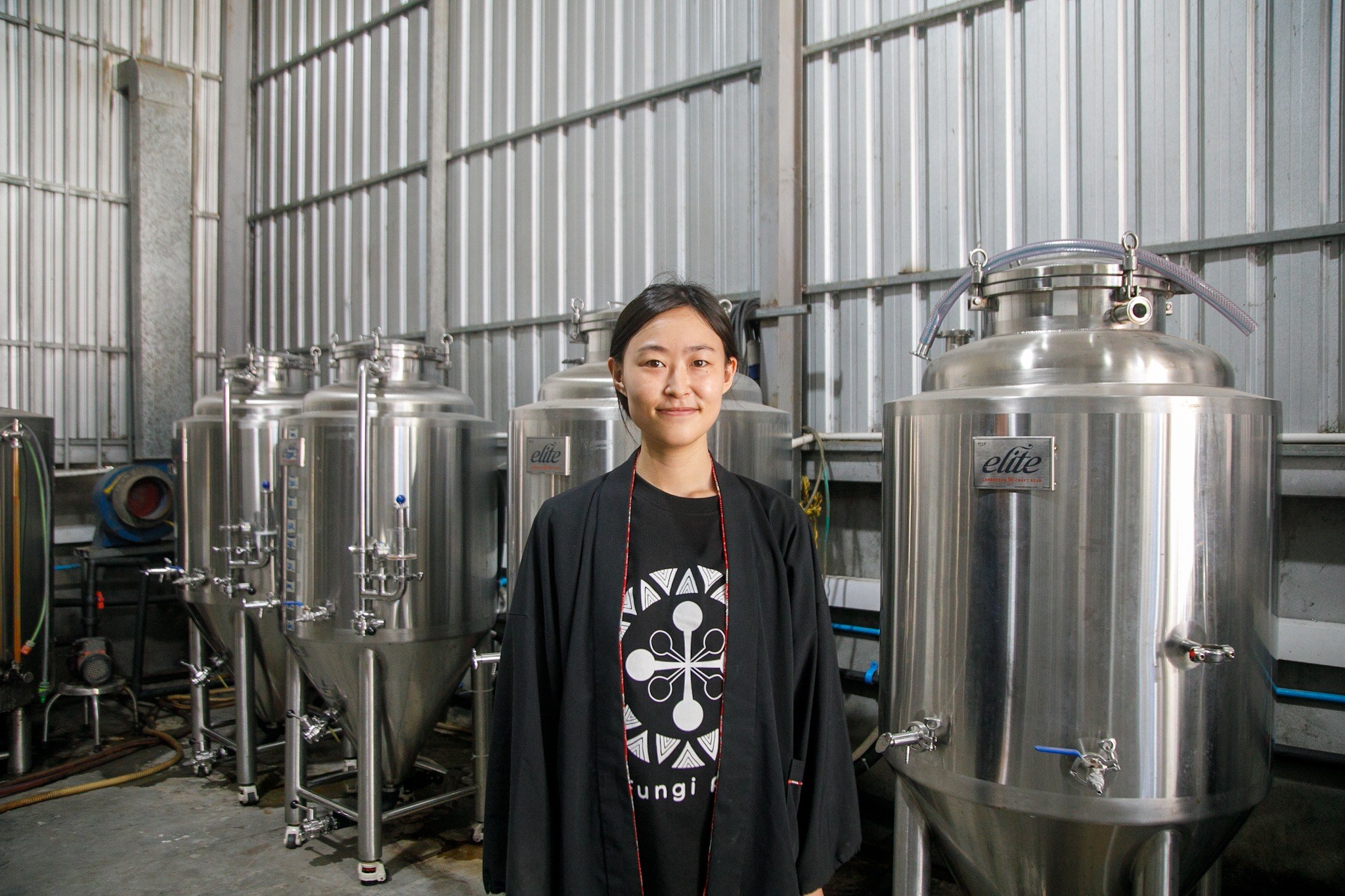
Natsumi Kawabata at Fungi Art Brewery in Phnom Penh.
Take
Once you decided to make sake, how did you learn to do it, and how did that lead you to Fungi Art?
Natsumi
I did not come from a science background. I studied economics at university, but I did not finish. I was not a researcher.
After that first period living in Cambodia and running the oden bar, I went back to Japan. During the pandemic, I trained for about two years at a sake startup in Sangenjaya, Tokyo. Their idea was to make sake into a drink for the world. I studied a lot there. When the pandemic eased, I returned to Cambodia to make sake.
Back in Cambodia, I met with Saga-san, the founder of Agro Ludens and Fungi Art. He was talking about making fuel from rice and using it to fly aeroplanes. He talked about the strong sunlight in Southeast Asia, the energy plants absorb, and all the rice grown here. Then I was like, “Could we use that energy for people?” I wanted to find out, as someone actually doing the work, whether making that fuel could really make the world better. That was why I decided to work with him.
It was not only, “Wow, he is amazing.” I also thought, “I want to work hard and do something just as ambitious myself!”
02 / Making sake is one thing. Making it delicious is another.
Take
You came back to make sake. Was that what you started doing straight away?
Natsumi
Not exactly! We were doing experiments with food and working on koji research. I thought, wait, I came here to make sake. There was a period when I did not really want to get up in the morning and just kept going out drinking.
Some of the research was fascinating, like using fungi to make a leather-like material. I had never heard of that. We also tried growing koji mold in liquid to make food, but it was not going well.
But after a while I was still thinking, where did the sake go?
Take
Before we get back to the sake, can you explain koji? I know it matters, but what is it actually doing?
Natsumi
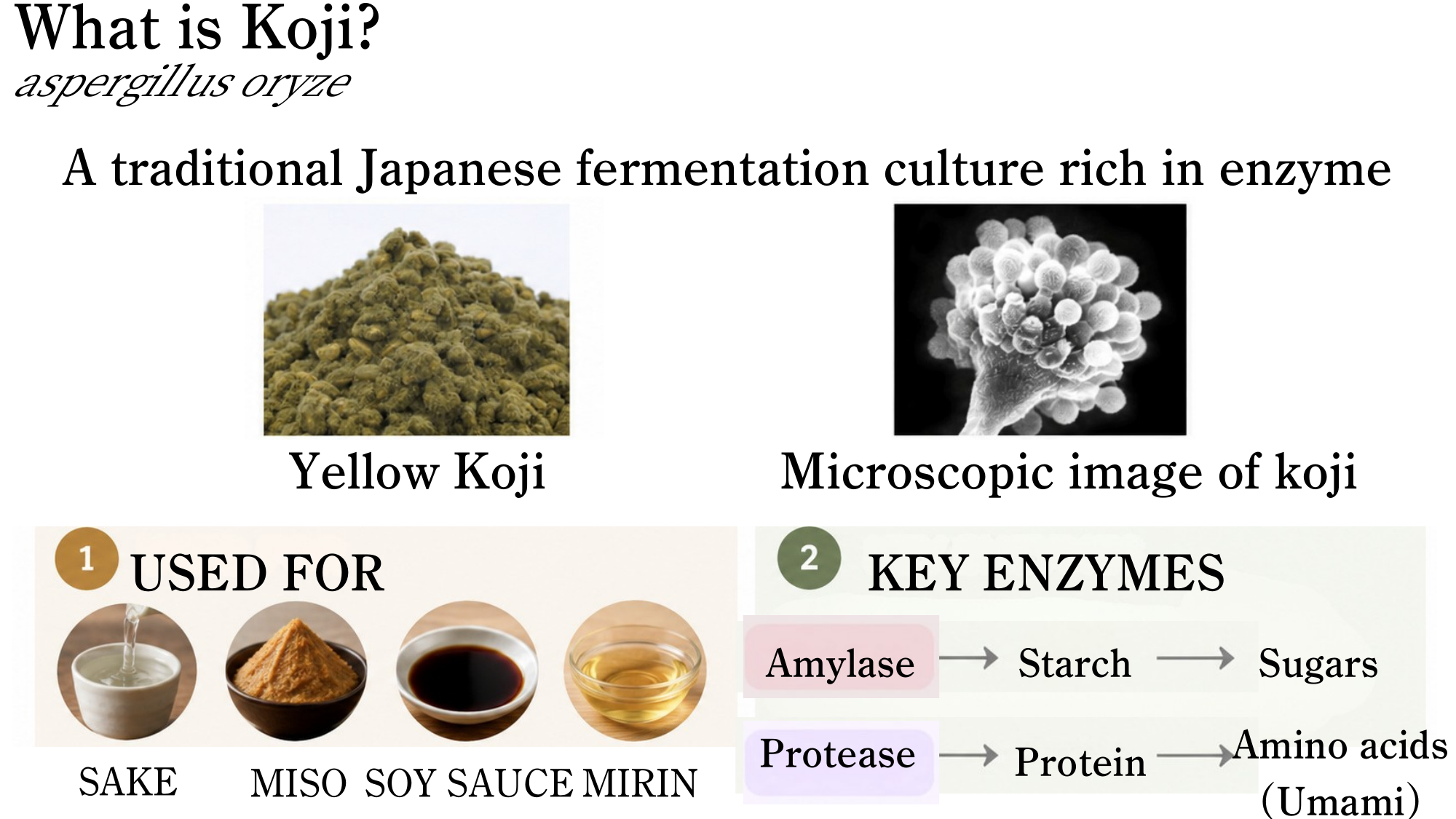
Koji supports so much of what tastes good in Japan, including miso, soy sauce, mirin and sake. The mold produces enzymes that break starch down into sugars. That is why rice starts to taste sweet as you chew it.
Other enzymes break proteins into amino acids, which give us umami. Koji mold and yeast are different organisms. Koji helps make sugar available, and yeast uses that sugar to produce alcohol, carbon dioxide and aromas.
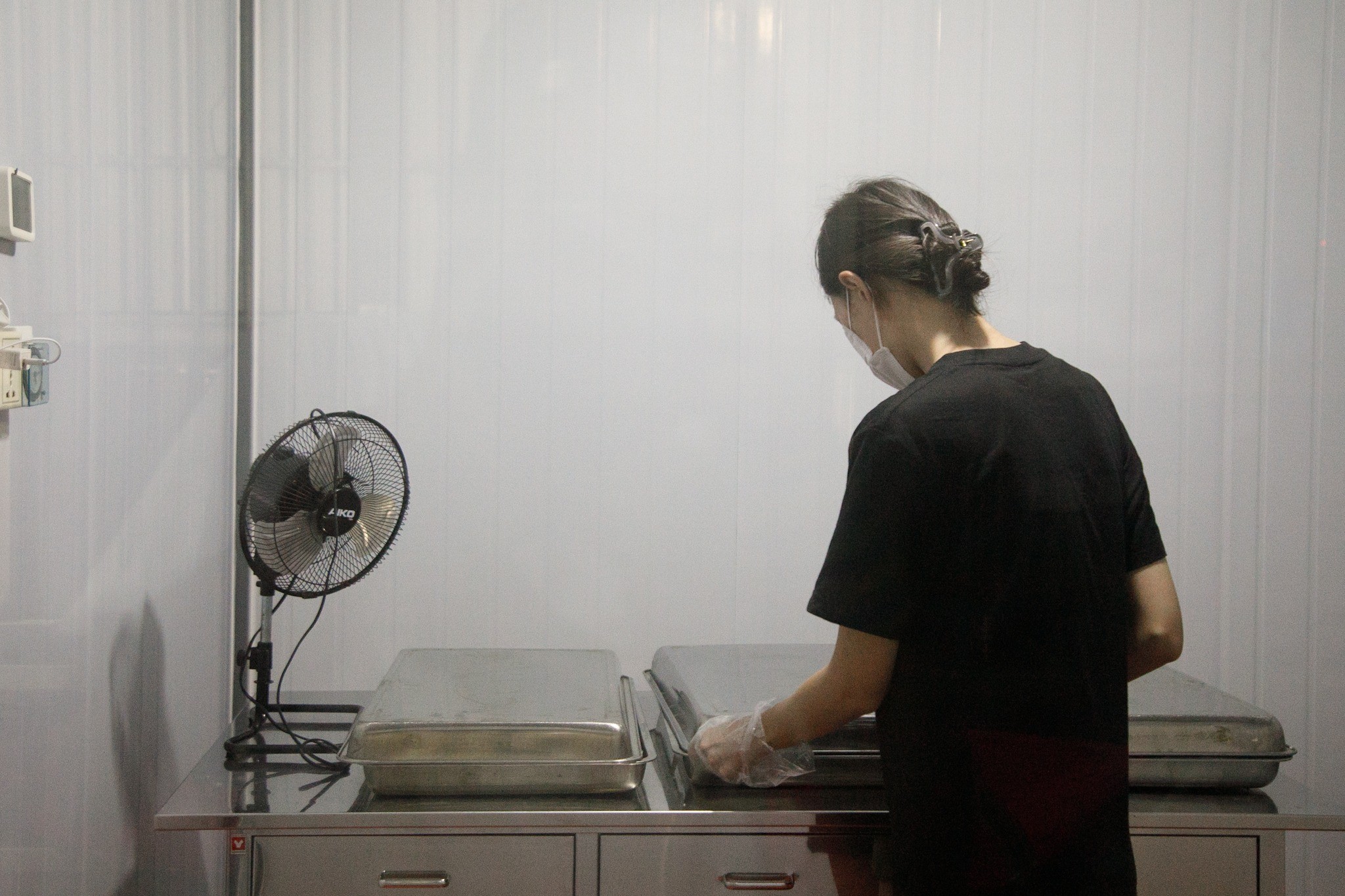
Koji and the enzymes it produces. Explanation from Natsumi. Click the slide to view it at full size.After disinfecting, Natsumi enters the room and prepares to show Take the koji.The koji Natsumi showed me during the visit.
Take
So the koji makes the sugars available, and the yeast turns them into alcohol. When you started making sake with Cambodian rice, what taste were you aiming for, and what made it difficult?
Natsumi
Making sake itself is probably fairly easy. Making it taste good is another question.
I began with the kind of sake I liked, fruity and easy to drink. But we changed the process a lot. Sometimes we made sake that exploded. Sometimes there were too many unwanted flavours.
Cambodian rice is long and thin. With Japanese sake, you usually polish away some of the outside of the grain. But these long grains do not polish neatly. That was one of the problems we had to solve.
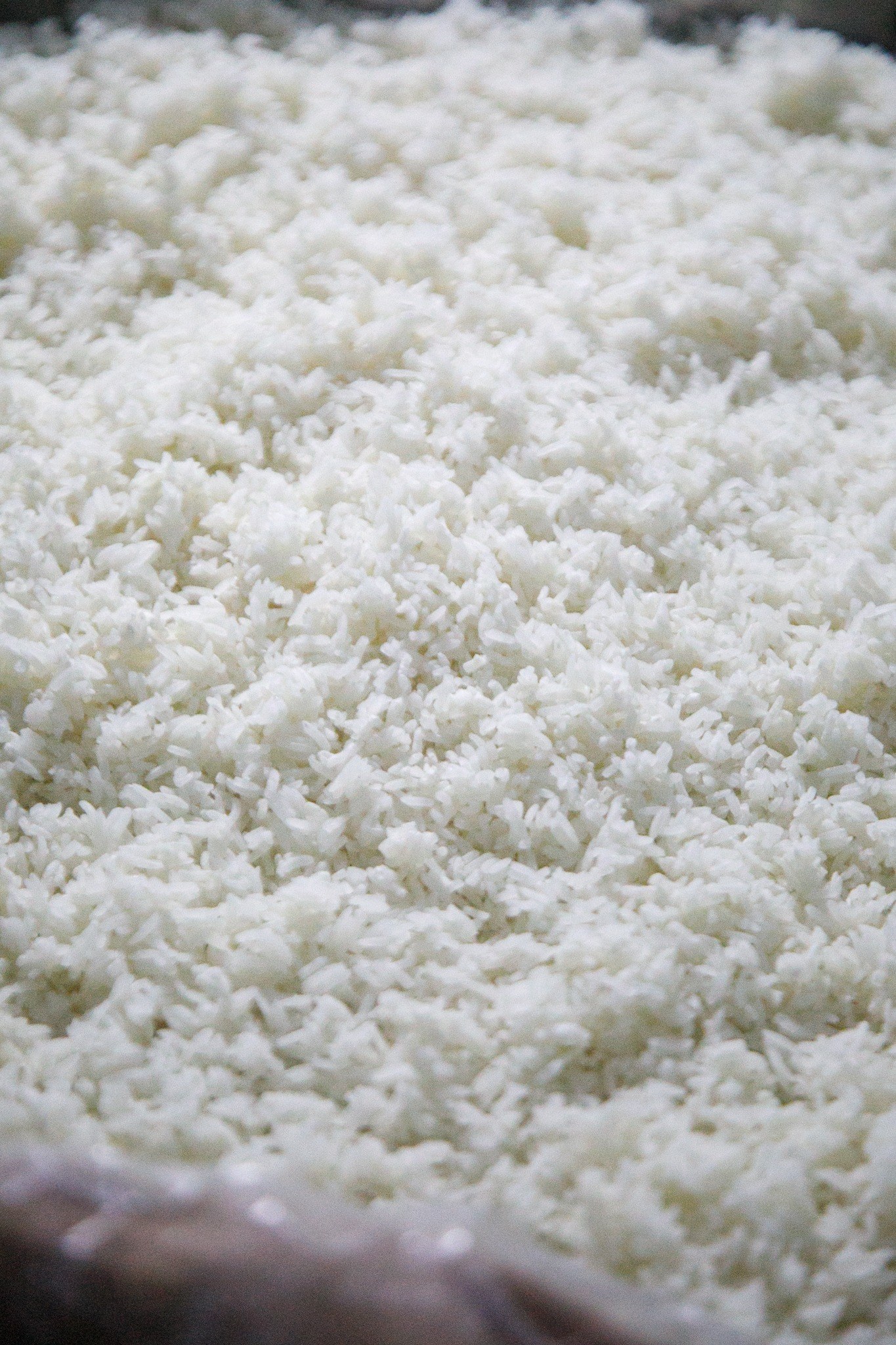
We developed a way to use enzymes to dissolve the starch from the rice and take out a sweet liquid. We could then ferment that liquid into sake.
Part of the idea came while I was working with a beer brewer. I watched the equipment and the way the sweet liquid was separated in beer-making. Could we learn something from that and use it with rice? We tried, and it worked.
It mattered that he was here and that we were working together. We would not have found it in the same way without him.
“Making sake itself is probably fairly easy. Making it taste good is another question.”
Take
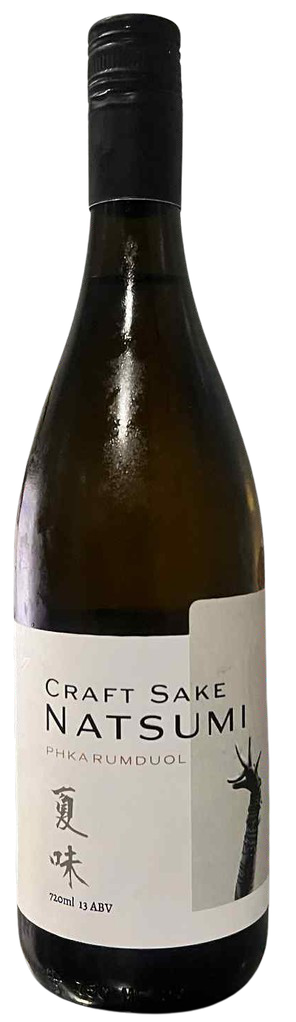
The sake you sell now is called Natsumi. How did your own name end up on the bottle?
Natsumi
People had all these opinions! It tastes fruity and a little like wine, so someone would say the label should look like wine. Someone else would say it is sake, so use Japanese characters. Then someone would say it is made in Cambodia, so give it a Cambodian name.
Should it be French, Japanese or Cambodian? I wanted it to feel like my own thing.
It took a lot of experimenting to get here. But delicious is what matters. If people enjoy it, I want more people to try it.
03 / The next drink begins with someone else
Take
Sake was your starting point. How did the work grow into shochu, gin and beer, and what were you finding here in Cambodia?
Natsumi
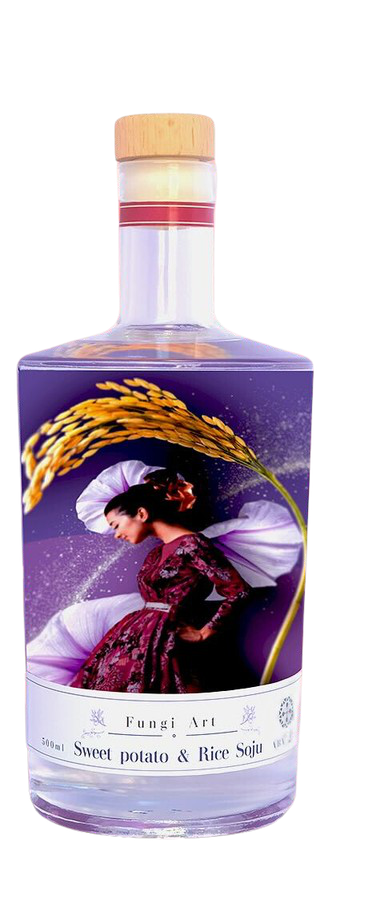
They grew as people learned that we were making drinks. Someone opening an oyster restaurant asked us to make a drink that would go with oysters. Another restaurant asked for a shochu to mark its tenth anniversary. That was how some of the products began.
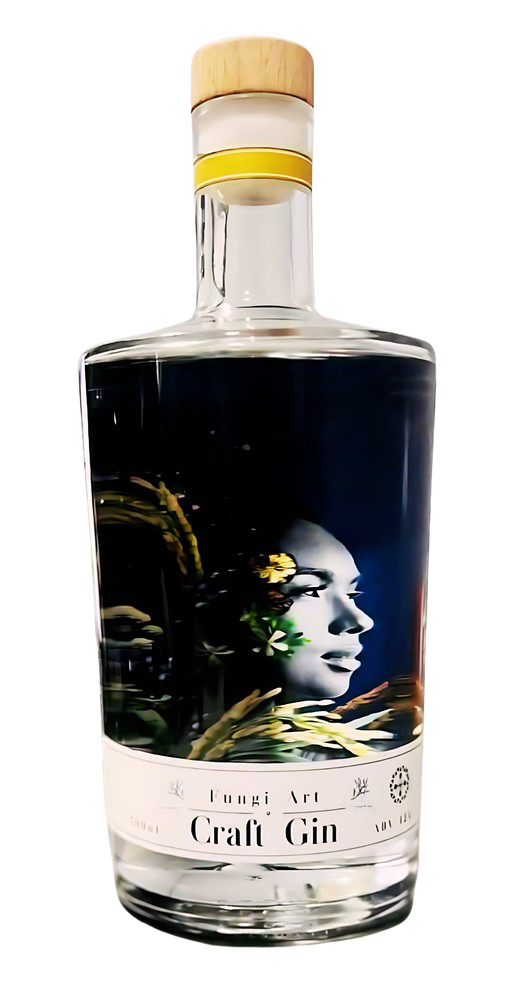
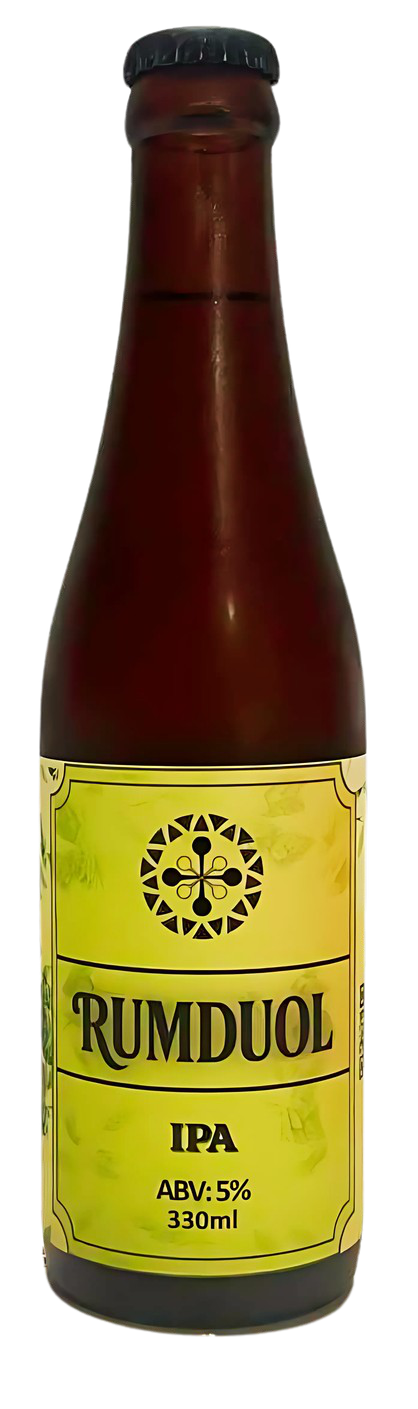
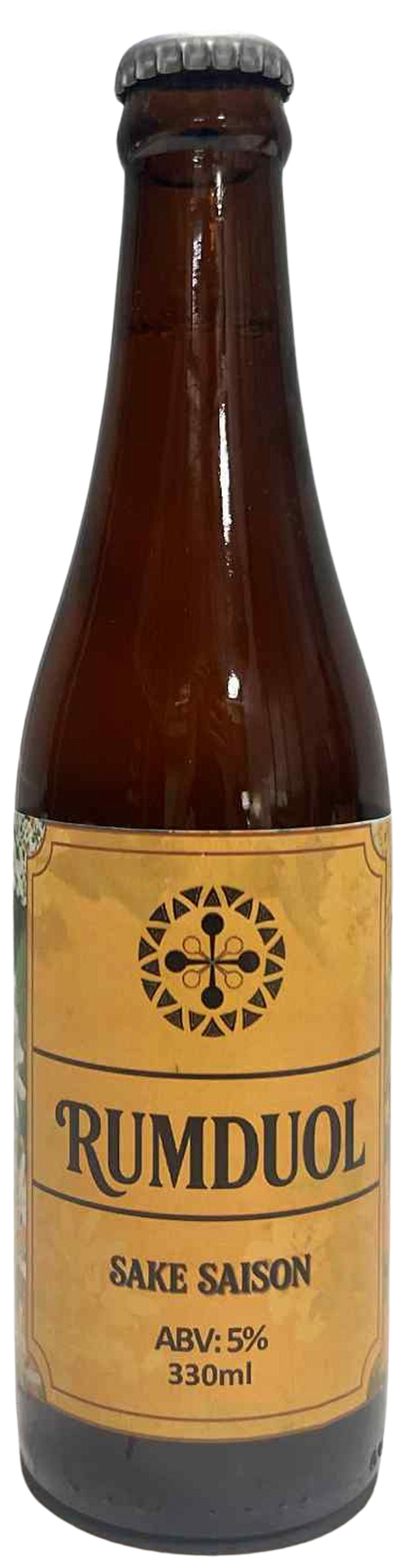
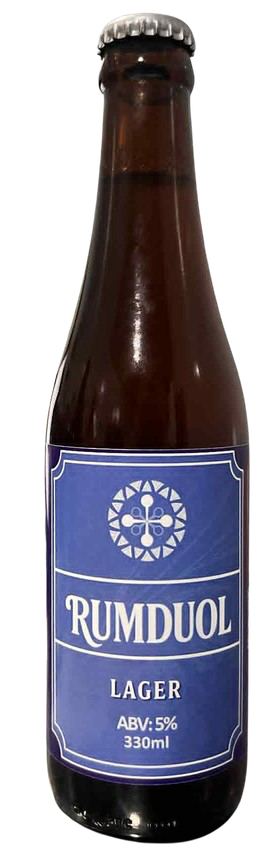
We use rice differently in each drink. The shochu uses rice and sweet potato. The gin starts with a rice-based spirit and botanicals. The beers use rice alongside malt.
I found a traditional herbal spirit when I went to Kampong Chhnang. The aroma was really fresh and citrus-like. Then you drank it and there was this strong herbal punch. It was delicious. I thought, this is something we should keep.
That inspired a drink we developed. But finding information about the ingredients was not easy. There was one plant I could not find anything about. I took a photograph and eventually found information in Vietnamese. I translated that into English and kept searching until I found a scientific name.
We buy herbs in town, and their condition changes depending on when we buy them. The aroma is different too. With several herbs together, getting the same flavour again is difficult. You have to keep working on the balance.
Natsumi Craft SakeShochuCraft GinIPASaisonLager
Photos provided by Fungi Art Brewery
Take
You have to keep adjusting to the ingredients and the fermentation. How does that shape an ordinary week here?
Natsumi
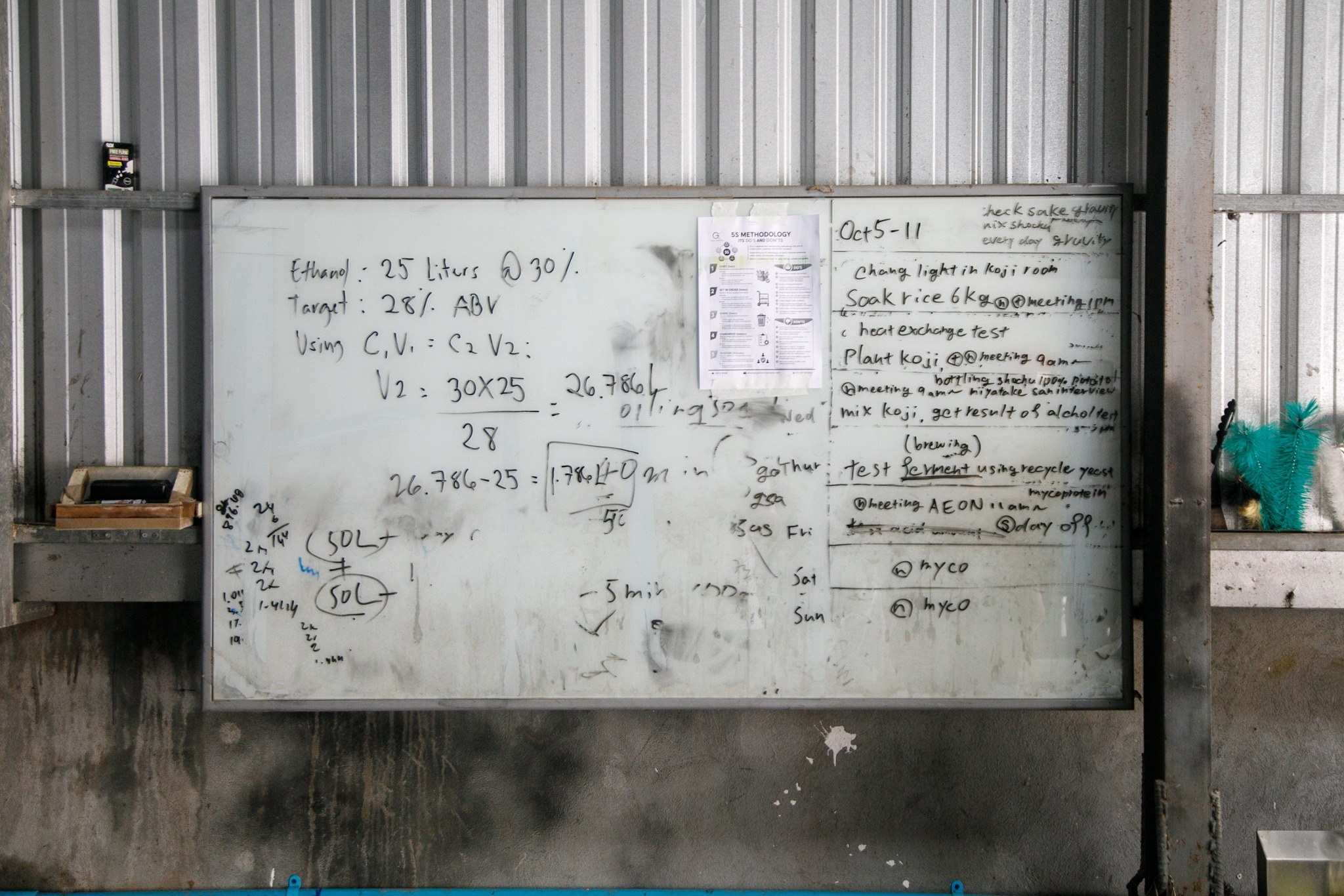
We make a weekly schedule on Mondays, but the drinks decide a lot of it. When we bottle depends on how the fermentation is going. It is never exactly the same.
This week we are testing heat treatment for sake, making koji and analysing alcohol. There is also a visit to AEON about stocking our products, and we are starting bioethanol experiments.
What we do changes every week. There is almost no fixed everyday routine.
The weekly work plan, written on the factory whiteboard.
04 / “I trust you. Try making it yourself.”
Take
You have a team working with you here. With the work changing every week, how do you help them learn what to do?
Natsumi
Here at the brewery I work with John, who is from the Philippines, and Socheata, who is Cambodian.
I recently went to Japan for about two weeks. The two of them kept the place going, which I was very grateful for. But when I returned, things had not moved forward very much. I realised that we needed a system.
We have started recording production steps and times in Google Sheets. John has worked with me for three years, and he can do more of the production now.
I write down the weekly schedule and explain what we are trying to achieve. We talk until he understands.
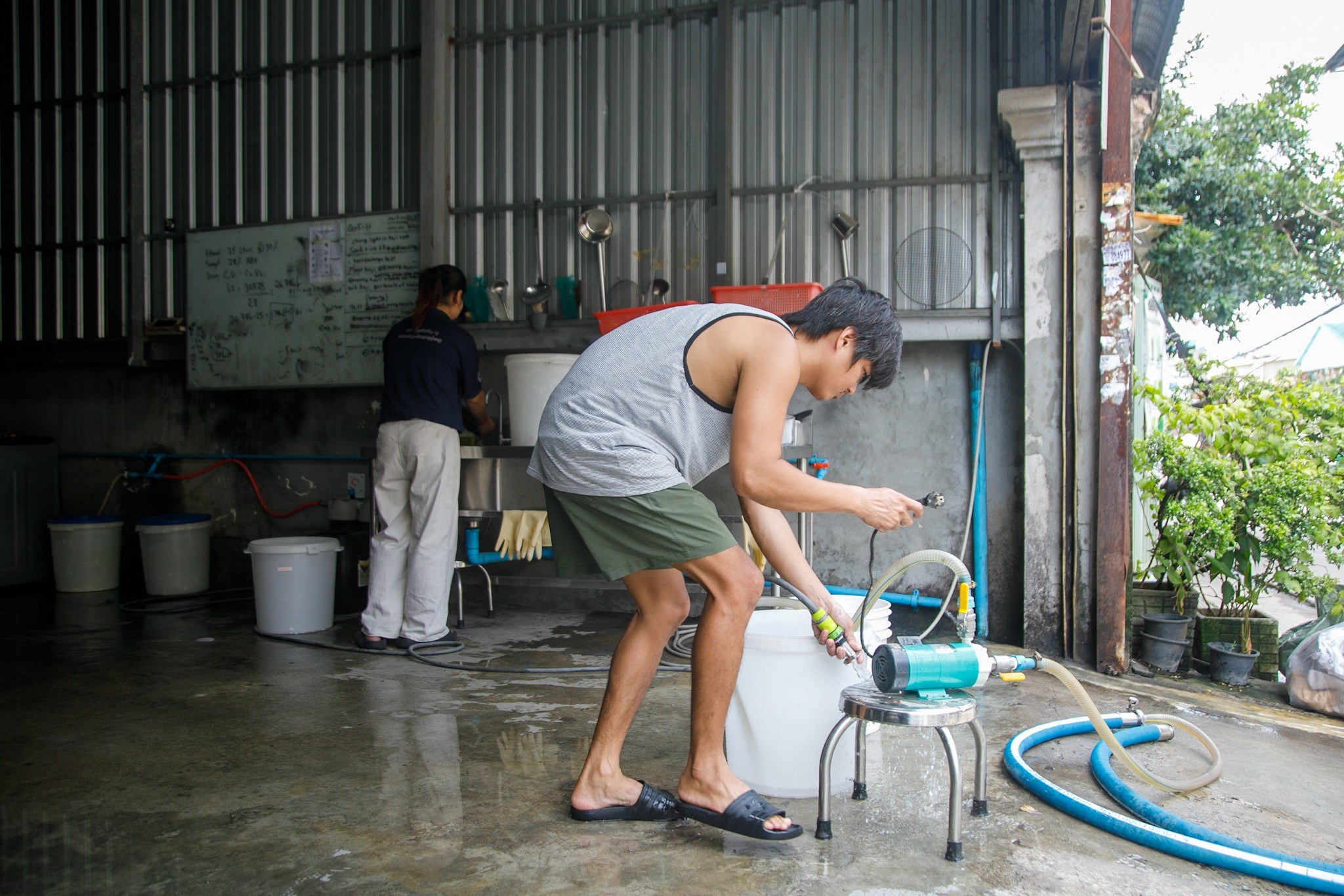
John cleaning equipment at the brewery.
Take
How did John get to the point where you could trust him to make sake on his own, and what is Socheata bringing to the team?
Natsumi
He started with washing bottles and spent a long time watching, maybe a year or two. Then I gradually asked him to do more himself. If he does not understand something, he looks it up. Recently he has been using ChatGPT to research things too.
I still remember the first time I asked him to make sake on his own. I told him, I trust you. I trust you, so try it.
Afterwards he thanked me for trusting him and letting him do it. I remember that very clearly. And he did it properly. He had been watching and learning.
For Socheata, she started in July. She is still learning, but she picks things up very quickly. A super rookie!
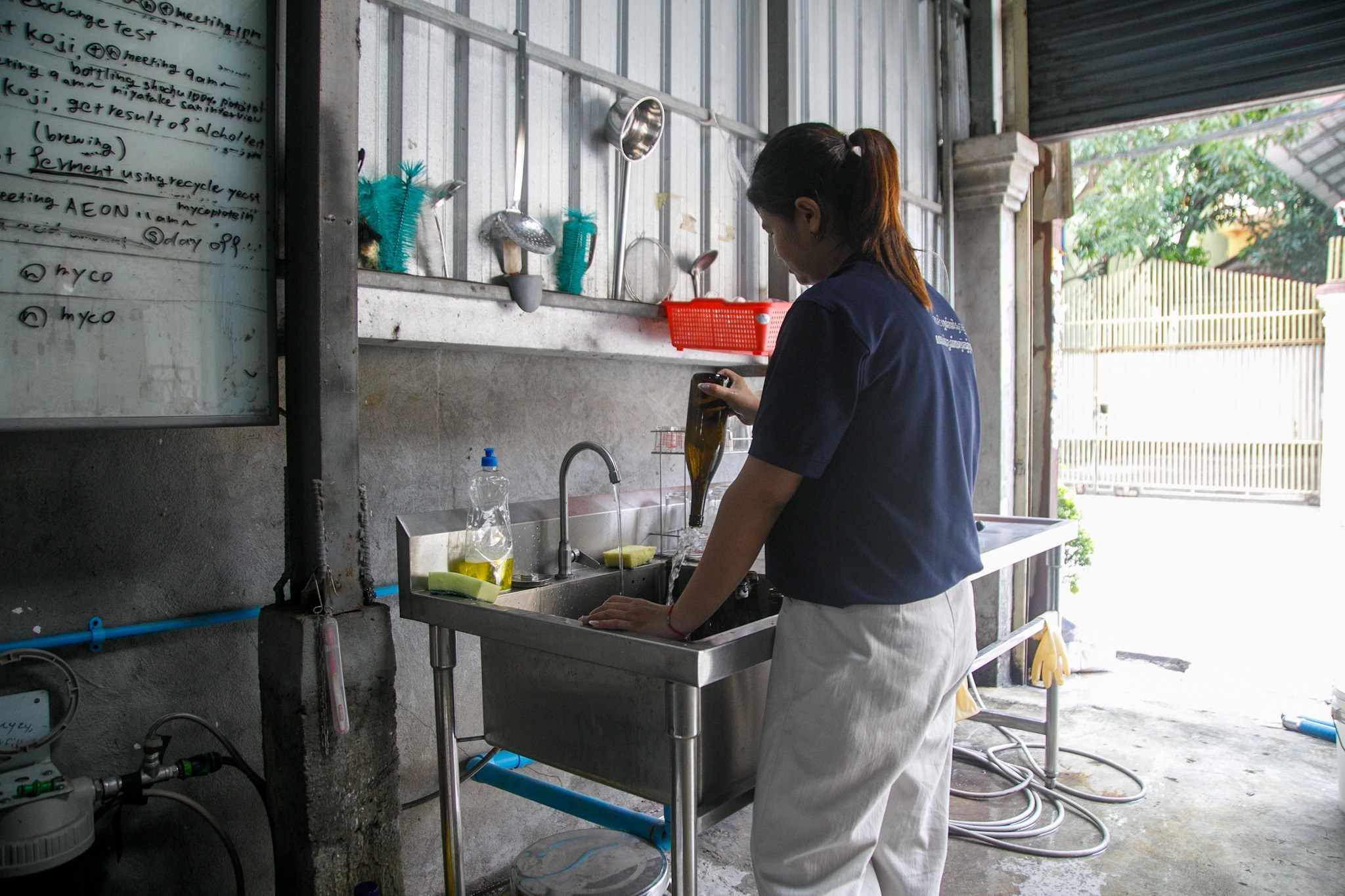
Socheata washing bottles.
She has just graduated from RUPP and studied a food-related subject. Her internship involved laboratory analysis for product registration. We are ordering analytical equipment so she can work on that here.
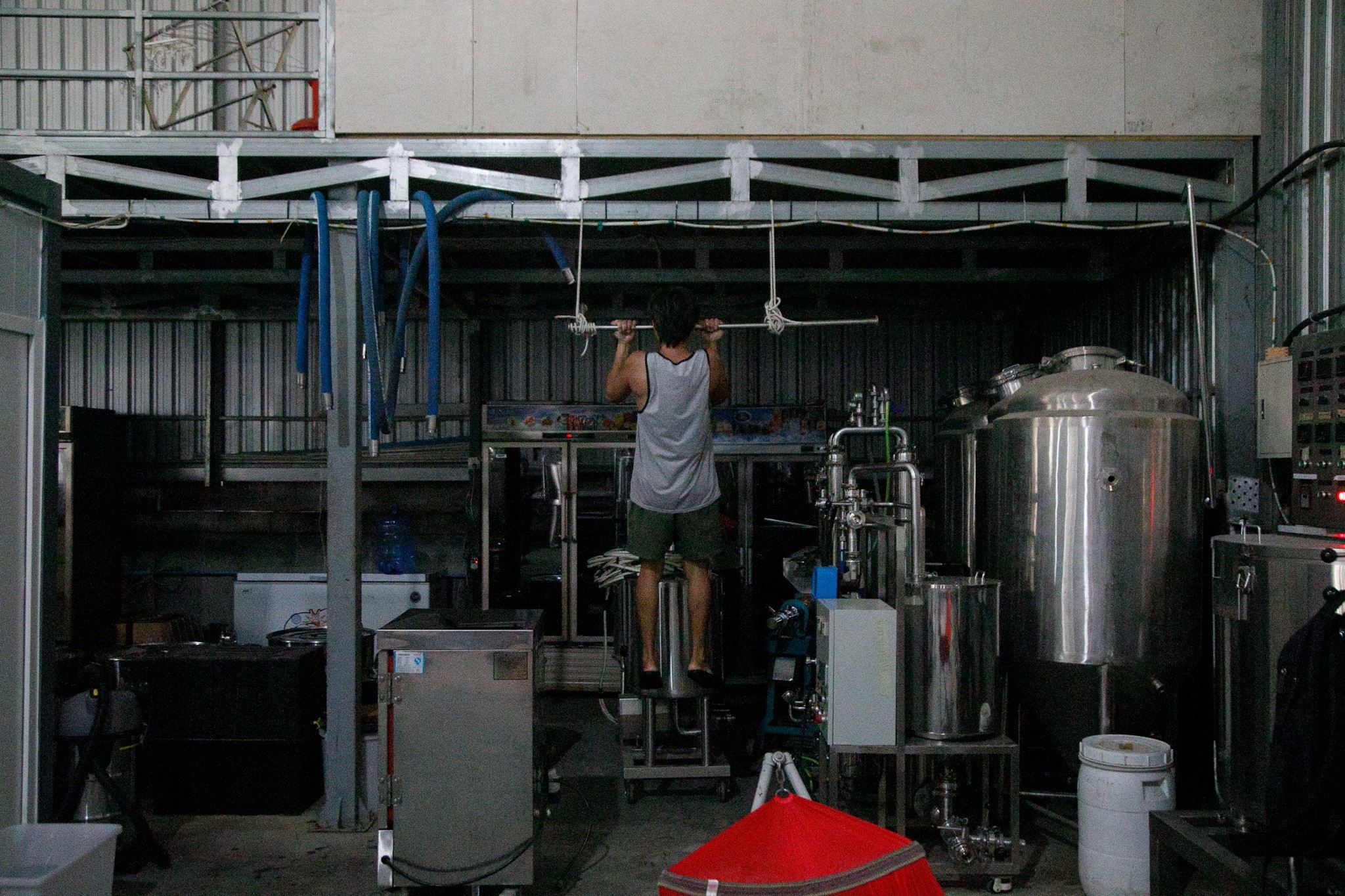
John exercising in the area he made inside the factory while the drinks are being made.
05 / The things you cannot hurry
Take
Even when the team and the schedule are ready, what can stop the work?
Natsumi
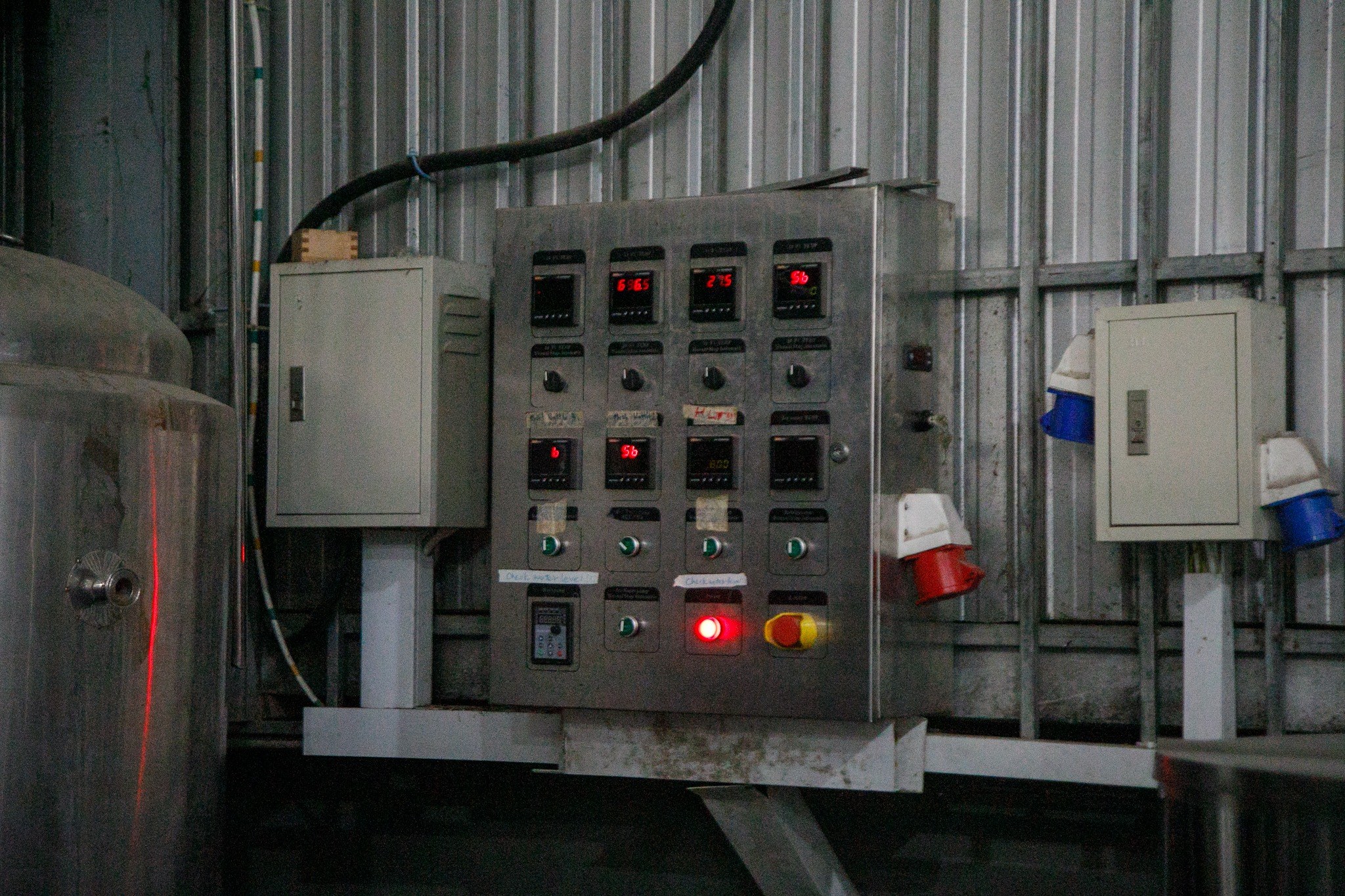
The hardest thing is a power cut. Everything stops, including temperature control. You have spent all this time making something, and suddenly you cannot protect it in the same way.
I live about an eight-minute walk away. If the power goes out, I come back here and check. But sometimes there is nothing to do except wait.
If the sake changes flavour, we can distil it into ethanol and reuse that. We try to avoid throwing it away. Beer and sake are especially difficult when the power goes out.
Repairing precision equipment is difficult too. We have asked students at ITC to help. But if a part has to come from Vietnam or China, it can take weeks.
Until it arrives, you wait. I adjust things where I can to keep production going, but there are still things only I know how to do. We need to work on that too.
The control system awaiting repair.
Take
You are keeping production going and looking after the team too. Has there been a time when that pressure became too much, and how did you get through it?
Natsumi
There was a time when important people left. My stress went past what I could handle, and I exploded.
A very close friend came to work with me. We had known each other since my early time in Cambodia. She was deciding whether to study abroad or come here, and I kept saying, come, come!
But once we worked together, we wanted different things. I wanted to work, discover something new and move forward. For her, finishing the work she had been given and having her own time was important.
That difference kept growing. It was painful for her too by the end, and she left. I had a really hard time with it.
I escaped to Morocco. I could not recover where I was, so I changed my surroundings. I saw different people and things. I started thinking, camels are nice. Maybe I should marry a camel handler!
When I came back, I felt a bit clearer. Around that time, Yamashita-san joined us to help with the business side. He had been living in Cambodia for a long time and knew Saga-san. He helps connect us with people and find opportunities for the products. That was a big part of it too. I cried a lot in front of him.
Afterwards, while I kept working, something gradually changed. Things I hated became ordinary things I could do. Accounting, ordering supplies. Before, I would think, why am I doing all of this alone? Can somebody else do it?
I realised I had been expecting someone to help me and becoming stressed when that did not happen. I began to take responsibility for what I needed to do.
Take
You began by wanting to do something for other people. After everything you have described, has what keeps you going changed?
Natsumi
At first, I think I was driven by anger and sadness. I wanted to do something for other people. It felt like the meaning of being alive.
Now there is more positive energy. This is exciting, this is fun. Staff have joined us, and I want the work to become something for them too. There are people and things I want to protect. That has made me a little softer.
But if I got rid of all the energy of anger, I think it would be hard to move forward. I would not quite feel like myself. So I am trying to keep a balance.
“There are people and things I want to protect. That has made me a little softer.”
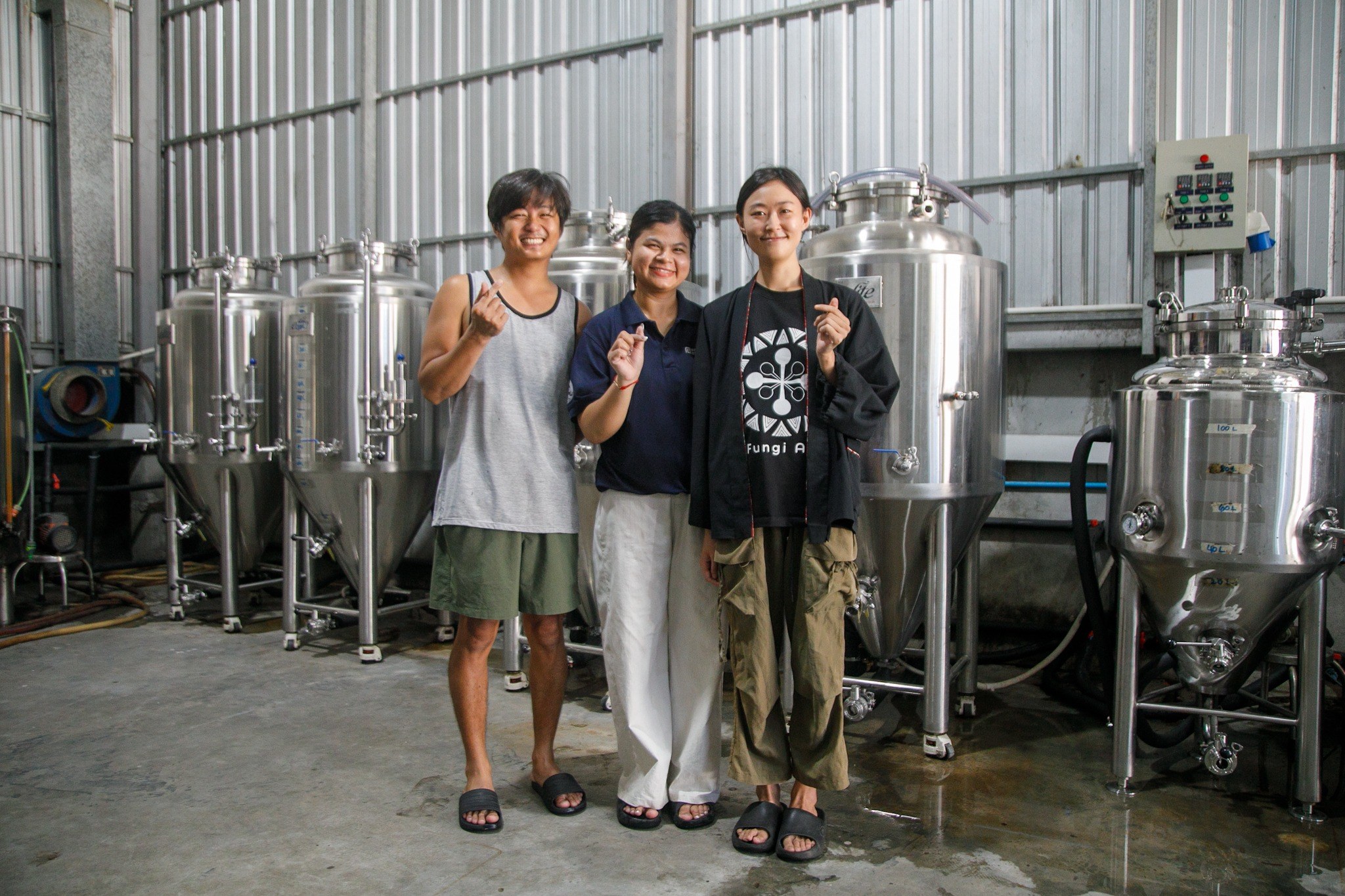
John, Socheata and Natsumi together among the brewery’s tanks.
06 / A reason to make the next batch
Take
When the work has been that hard, what makes you feel it is worth doing?
Natsumi
People enjoying it makes me happy. Then I want to make something even more delicious.
The sake changes from batch to batch. Someone prefers batch twelve, someone else thirteen. They enjoy those differences. We are still changing things and trying to make better sake together.
There was a restaurant customer who bought a lot. I thanked him, and he simply said it was because it tasted good. That made me really happy.
And once there were two Cambodian women who kept ordering more of our sake. They were enjoying it so much. I thought, this is what I have been doing all this work for.
Take
To keep making it, the business has to keep going too. What are you trying to work out now?
Natsumi
We currently receive government research grants to develop technology that co-produces ethanol fuel and a new rice-derived protein material. By producing both fuel and food ingredients from rice, we aim to maximise its added value.
Separately, for our sake business, I think we need to export. I want to get the drinks to Japan and Vietnam. But I am worried about whether we can deliver them with stable quality.
We sell fresh sake now. I am experimenting with heat treatment so we can stabilise it for export. It still has to taste good. That is the reason to do the experiment, not just getting it out of the country.
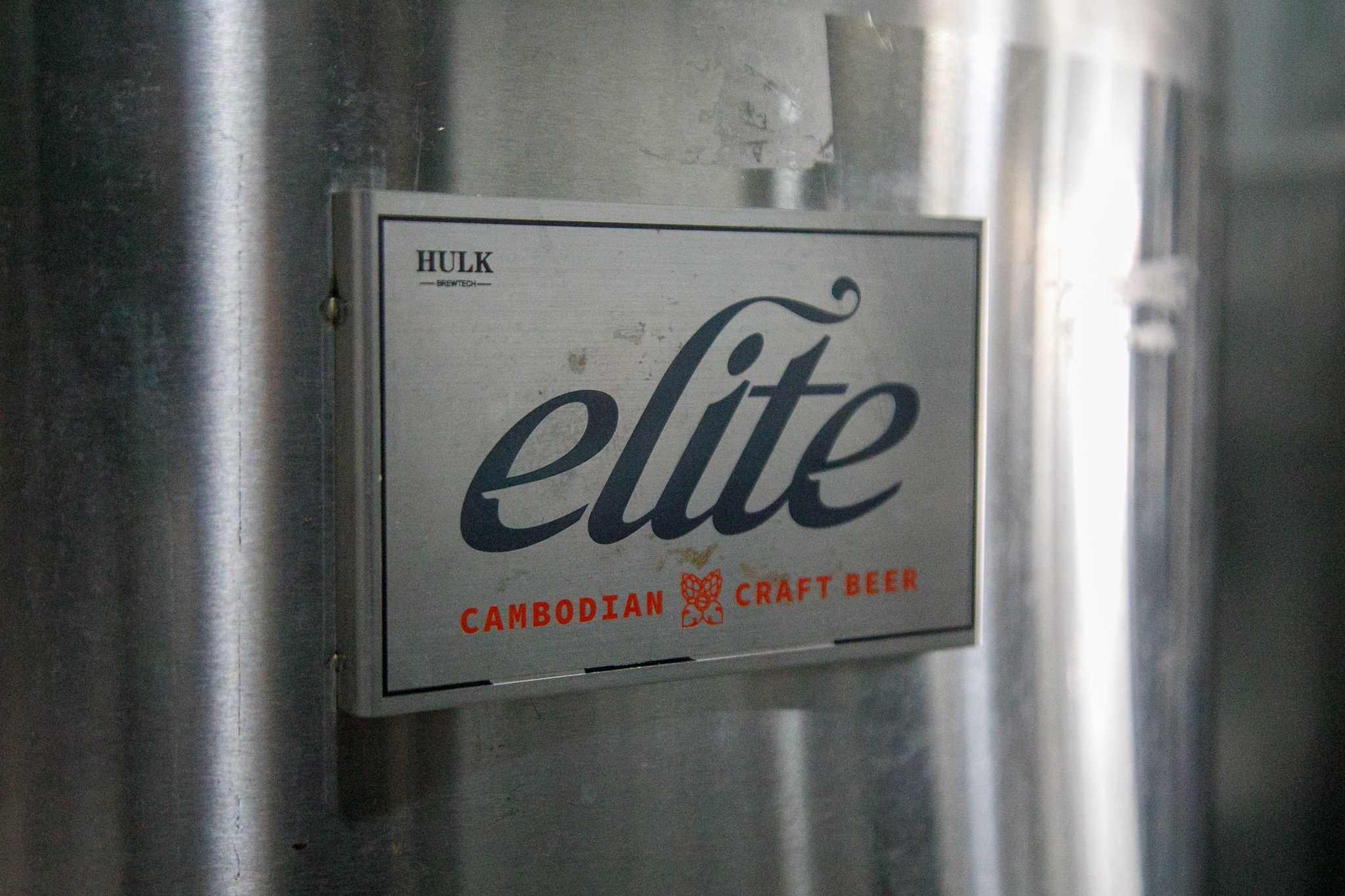
An Elite-branded tank acquired second-hand, according to Natsumi’s account during the visit.
Take
The sake is already reaching people, and you are testing what else rice can become. What possibility do you see in using Cambodian rice for food and fuel?
Natsumi
A lot of Cambodian rice leaves the country before it has been processed into something with more value. There are not enough places to mill and store it.
I want us to buy Cambodian rice at a proper price and make alcohol, food and fuel here. If we can make products with more value in Cambodia, I hope that can help the farmers too.
We are already carrying out government-funded demonstration experiments to co-produce ethanol fuel and a new rice-derived protein material. We are testing production feasibility and greenhouse gas emissions as we work towards commercialisation.
Rice, food and fuel / Background
Agro Ludens and Fungi Art are already conducting government-funded demonstration experiments in Cambodia to co-produce ethanol fuel and a new protein material from Cambodian rice. They are assessing production feasibility and greenhouse gas emissions, with commercialisation targeted for around 2030.
Take
The fuel work is still being tested. How about the food, can we taste that already?
Natsumi
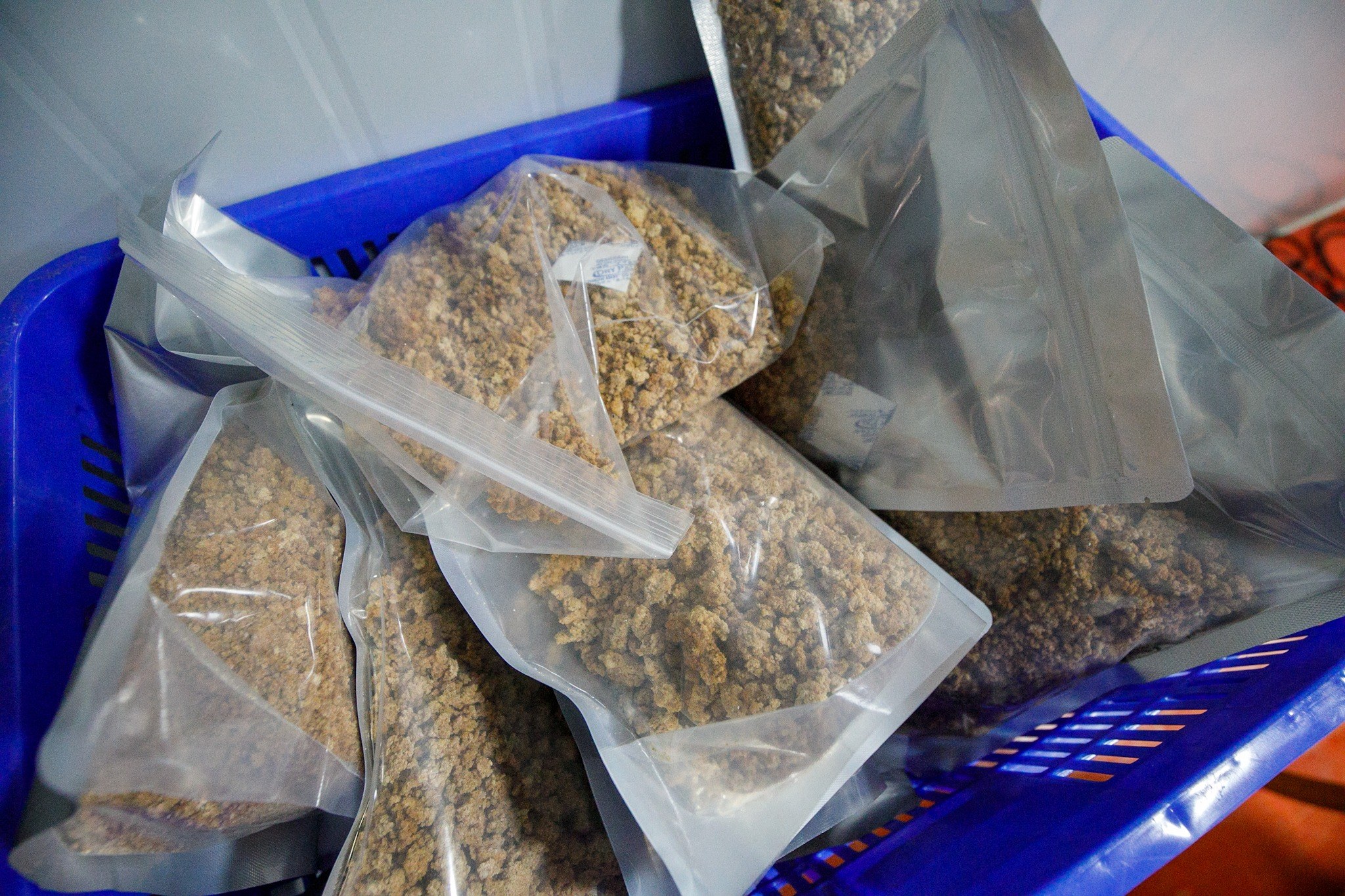
Yes. You can rehydrate it and use it as a meat-like ingredient, or eat it with yoghurt like cereal. With salt and pepper it can be a snack too. It can become different things depending on how you use it.
UMAMEAT sample during the visit.
Take
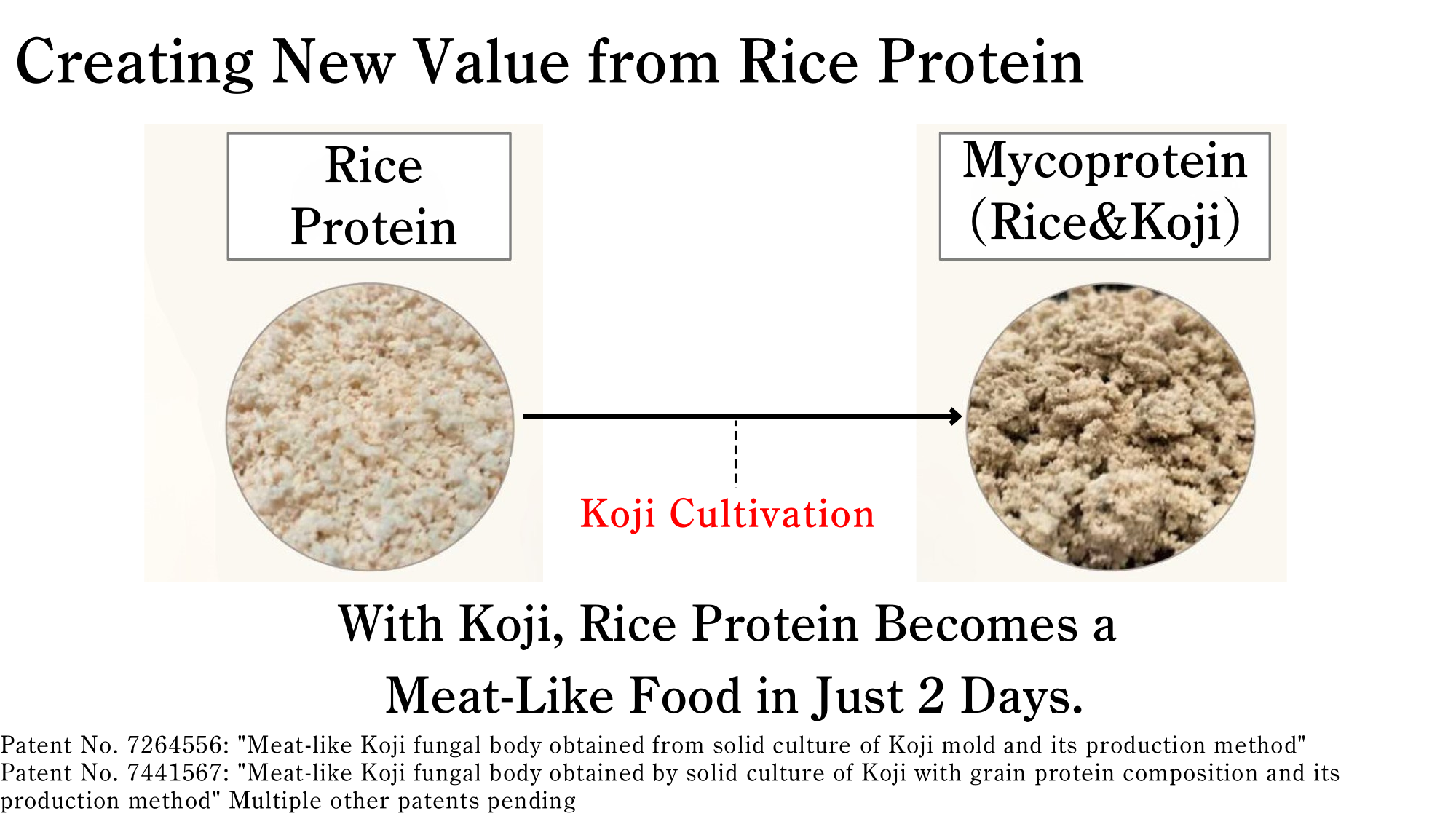
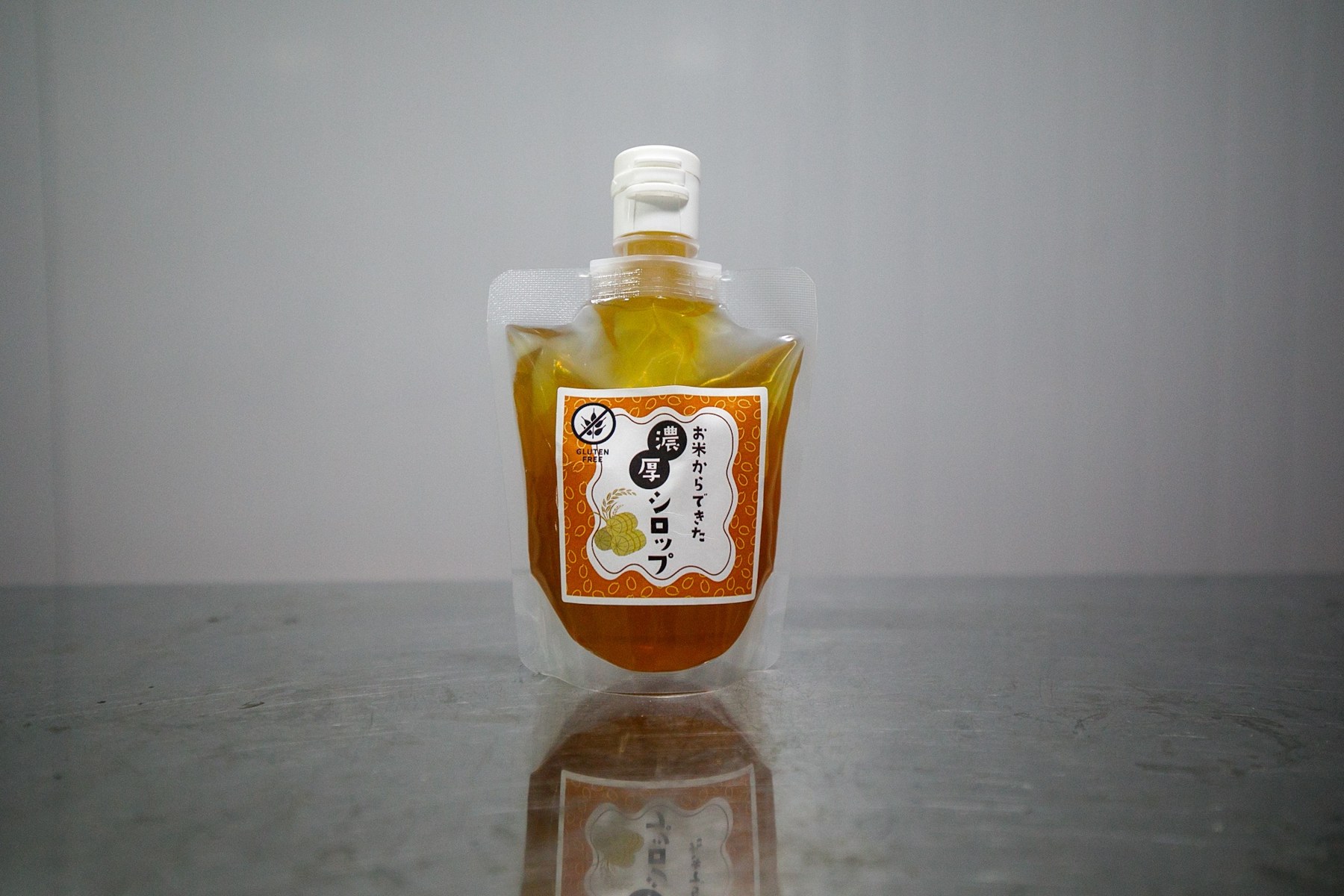
I tried a piece. It was crisp, almost like a snack. The material described in Natsumi’s presentation as UMAMEAT is made from rice protein with koji mold. It is different from yeast. She also showed me products developed on the Japanese side of the business, including rice syrup. Rice was opening into quite different things.
Rice protein and koji become a meat-like food. Explanation from Natsumi. Click the slide to view it at full size.A rice syrup from the Japanese side of the business, shown during the visit. Sold in Japan through Haccome.
The work in Japan / Background
On the Japanese side, Agro Ludens sells rice syrup and prepared dishes made with the fermented protein food Comeat through Haccome. The syrup uses Japanese-grown rice and is sold in Japan, separately from the Cambodian brewery’s products.
07 / Leaving room for what might happen
Take
Fermentation needs time, and it does not always do what you expect. How do you feel about that now, and what would you like to try next?
Natsumi
Maybe I have got used to it. I used to shout when a machine broke and I had to fix it. I do not react quite like that now.
I still enjoy thinking about what we can do with what we have. If things are too stable and there is no room to do something new, I may not find it very interesting.
I want to make a good dry sake because people have asked for it. I would also like to make something more refined to enter into competitions.
But the thing I personally want to do, which has not really moved forward yet, is cultivate Cambodian yeast. I am collecting flowers and talking with a biochemistry teacher. We are trying cultures and seeing whether they ferment.
I would love to use the national flower, but I cannot find it! I have asked people and looked for it. For now, I am experimenting with jasmine.
“I still enjoy thinking about what we can do with what we have.”
John, Natsumi and Socheata at Fungi Art Brewery.
After the conversation / Take
When Natsumi said she could not find the flower, I thought of Sopheak. I had recently interviewed him for Sontanea, and he knows plants. I told her I would introduce them. We had started with what one person wanted to make. We ended with someone else who might help the next experiment happen.
Then I asked whether she could make a drink for an itonami gathering. We began talking about bottles, labels and what might be possible. I had come to hear her story, and was already imagining something we could make together.
What stayed with me was how her work had changed through other people. A brewer helped her see a different way to work with rice. A colleague learned by watching until he could make sake himself. A close friendship became painful when working together revealed different priorities. There was room in this conversation for all of that, and for the excitement of trying something else. Before I left, there was still a flower to find.
In conversation
Natsumi Kawabata
Natsumi Kawabata (河端 菜摘) is COO/CTO of Fungi Art, working across production, research and the running of the brewery in Phnom Penh.