SontaneaStory 001

How Do You Protect Slowness Without Protecting Exhaustion?

After almost a decade in marine biology and conservation, Jess Kalisiak began Interwoven as a tactile way to bring her ecological values into daily life. Inside a Phnom Penh atelier shaped by natural fibres, local relationships, rescued cats and deliberately slow production, she is still asking how a human-scale business can survive without losing what matters.

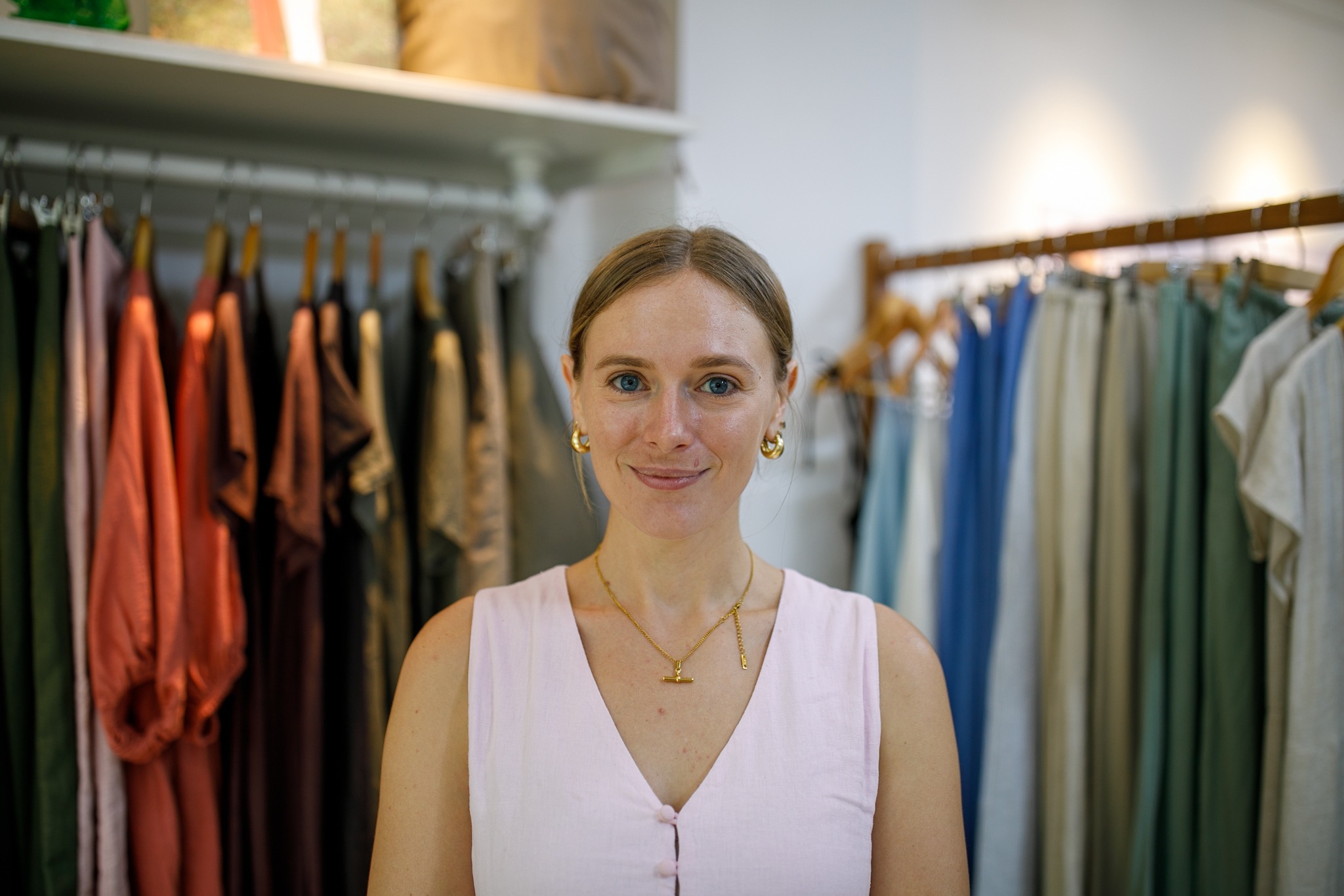
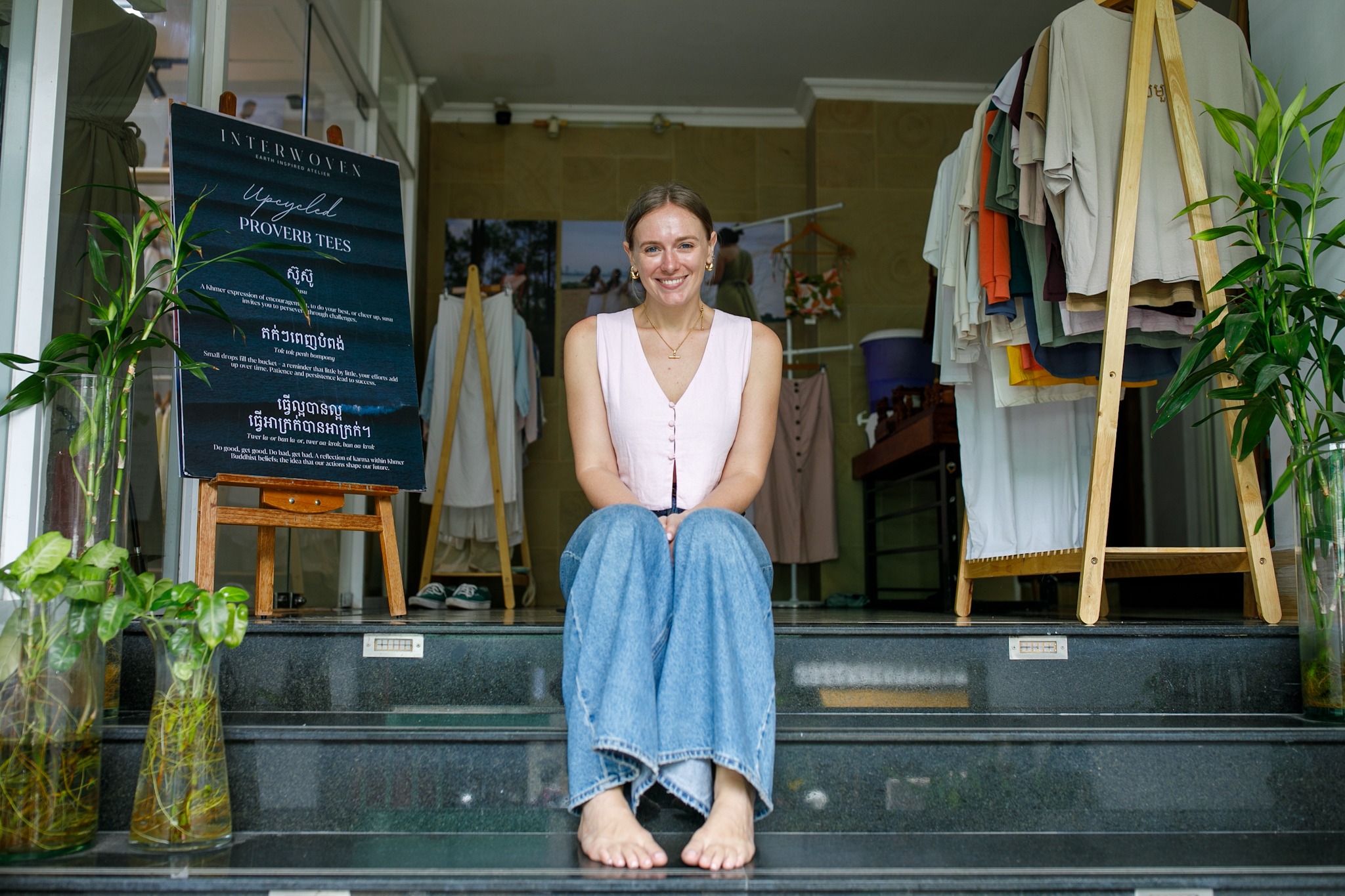
Jess Kalisiak at the entrance to Interwoven
Jess Kalisiak at the entrance to Interwoven in Phnom Penh.
Why I wanted to meet Jess

By the time Jess and I began talking, one of the cats had climbed onto my lap, curled into a ball and fallen asleep. Around us, garments hung beside plants, labels, patterns and the small objects required to keep both an atelier and a household of rescued animals moving. The work, the care and the living world occupied the same space.

I had first understood Interwoven as an ethical clothing brand. What made me want to meet Jess was the change underneath it. After years in marine biology and conservation, she had stepped away from institutional work and begun making things with her hands. I wanted to understand what had changed in the way she wanted to work, and how that change had led here.

The clothes, I discovered, were never the destination. They became a way for Jess to make a worldview tangible through fabric, labour, relationships and pace. The question beneath our conversation was how closely a person can make the structure of their work resemble what they believe, without being consumed by the effort.

Take

Before Interwoven, you spent years working in marine biology and conservation. What changed in the way you wanted to work?

Jess

It was a slow process. I worked in the Seychelles and the Maldives, and then came to Cambodia. During Covid I lived on a floating house in Koh Sdach, doing biodiversity surveys and spending hours in the water every day. Then I moved to Phnom Penh and suddenly I was sitting in front of a screen. I felt completely disconnected from the living world.

I also became uncomfortable with the language we used in sustainability. Forests became resources. Rivers became water supplies. Fish became fisheries. The living thing disappeared and what remained was its utility to us.

I had spent almost a decade doing biodiversity surveys, and I still love that world. But I had watched research fail to protect the places it described. I published research on seahorse populations and identified areas that should be protected, only for that habitat to be dredged a few months later. I became jaded. I did not want to protect nature in a way that treated it as something separate from us. Ecological disconnection is not only an environmental problem. It is a psychological one.
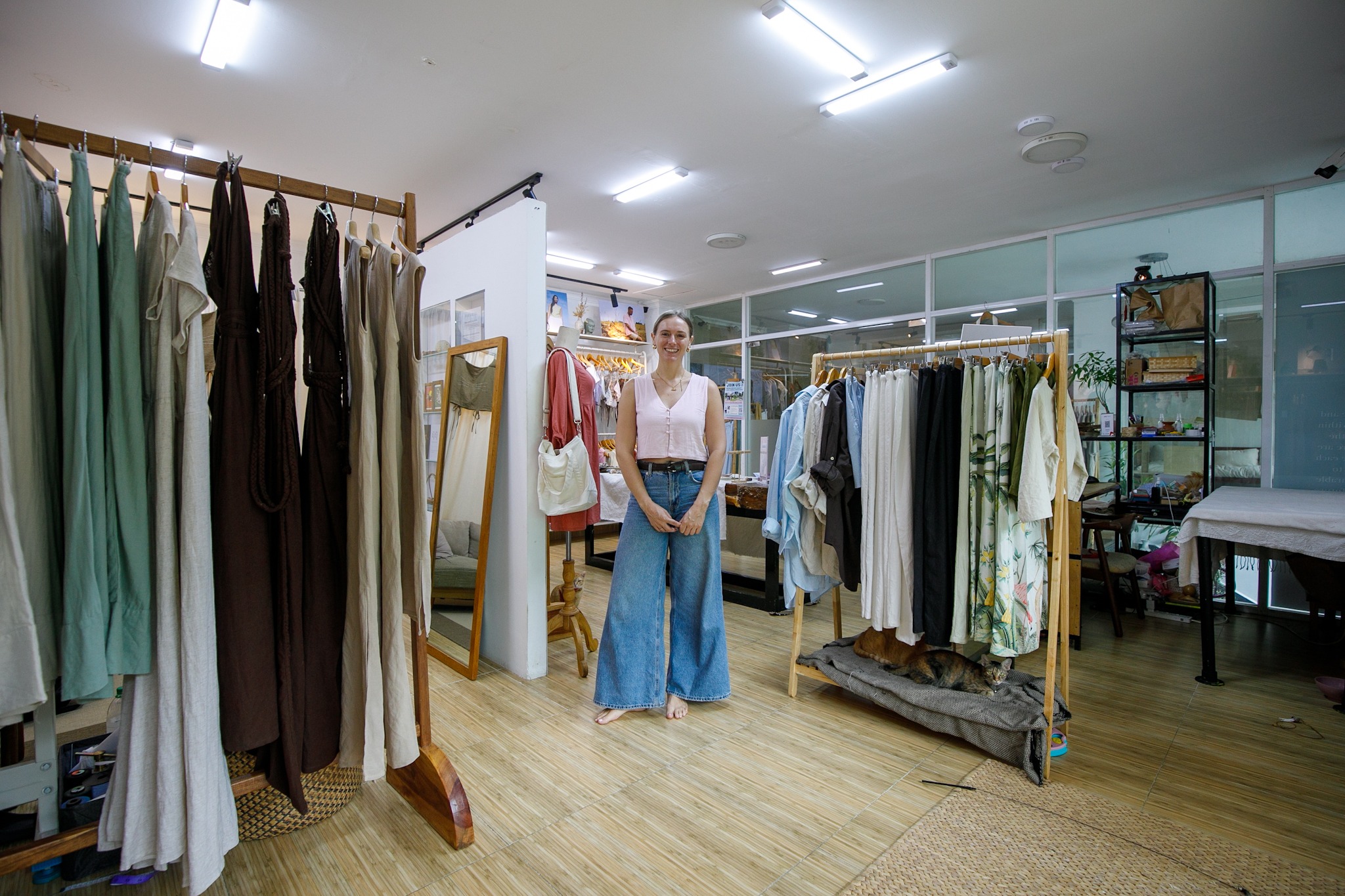
Interwoven shop and working space
Interwoven’s shop and working space, where garments, people and animals share the same daily environment.
Take

So Interwoven did not begin with a plan to start an ethical fashion brand?

Jess

No. It began as something tactile. Before, I had been in the water taking macro photographs and observing marine life. In Phnom Penh, I was on a screen all day, so making became something I could touch and play with.

Braiding Sweetgrass brought me back to life. It showed me how Indigenous wisdom and science can coexist, and I became interested in rewilding people, helping us feel that we are not separate from nature. I tried body casting, eco-somatics, and other ways of making before clothing became the form that felt possible to sustain as a business here.

It is just the vehicle. It is not about the clothing. Interwoven is how I translate my values, my relationship with nature and people, my discomfort with waste, and my need for creativity and meaning into the world.

The name sits at the centre of that. Everything inside an ecosystem relies on something else. Nothing exists independently. Our fates are interwoven.

“It is just the vehicle. It is not about the clothing.”
Take

What does that way of seeing ask of you in the work people do not usually notice?

Jess

People see a finished garment, but not the time behind it. Making clothes is highly technical and laborious. A single pattern can take hours. If someone asks for a different length or shape, we may need to create an entirely new pattern before the tailor begins.

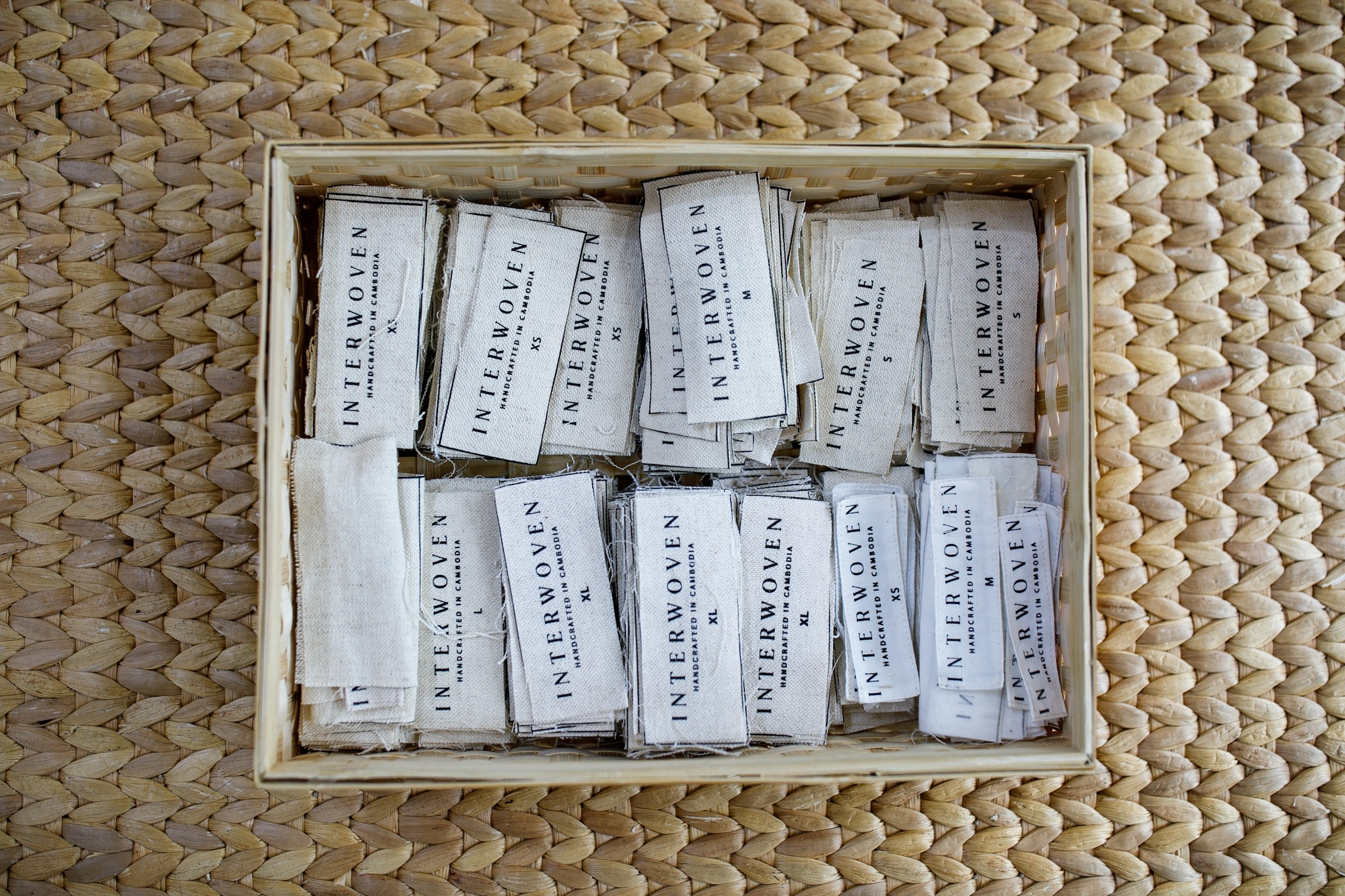
I refuse to order labels from China when we can make them here. We send fabric scraps to a social enterprise in Siem Reap to be screen-printed, then cut every label, fold the seams and sew it in. Our paper tags are printed locally on bamboo paper. None of this is fast, but every choice asks whether we can make less impact and support people already working around us.

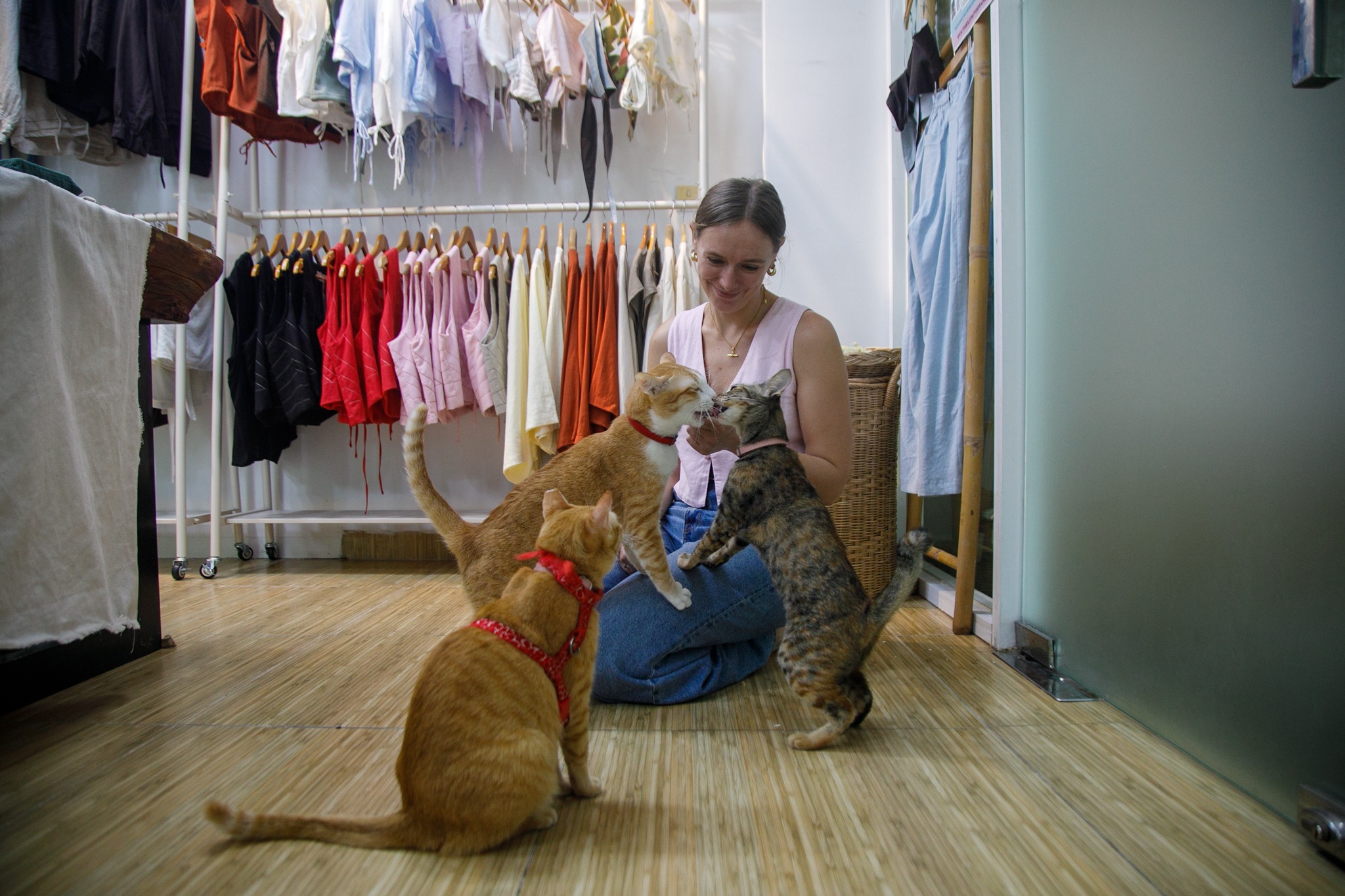
Care is part of the working day too. Caroline and I both rescue cats. Through the atelier, we support up to 100 street cats with daily feeding, medical care, vaccination, sterilisation and emergency rescue. It is not separate from the shop. We are not meant to bear the weight of the whole world, but we are here to tend the small worlds around us.

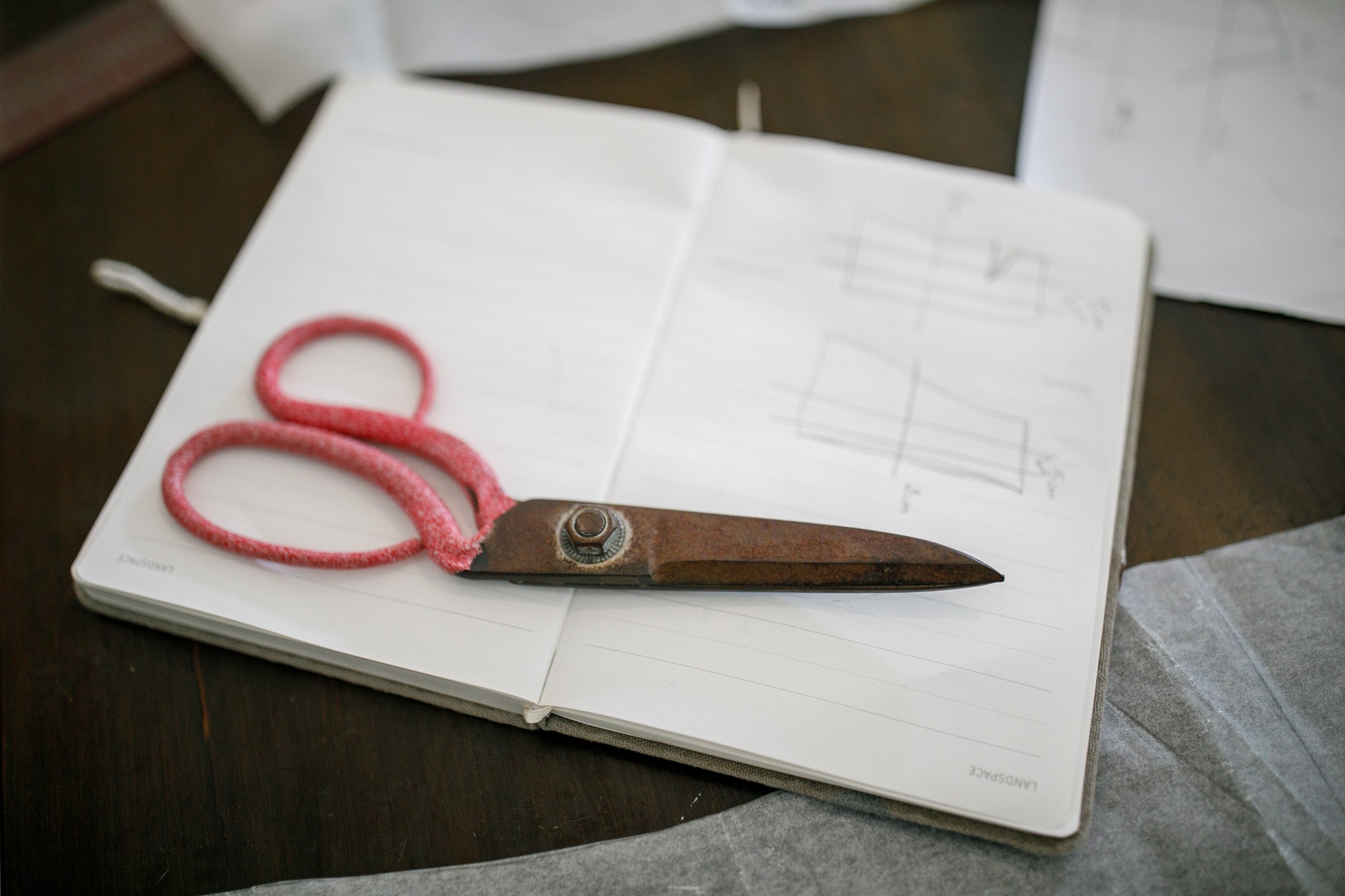
Scissors and pattern notes
Patterns, adjustments and the tools behind a finished garment.
Interwoven labels
Interwoven labels gathered during the making process.
Take

What choice has shaped Interwoven more than customers might realise?

Jess

Nothing about what we are doing is cheap or efficient. But it reflects the kind of industry I want to help create. I want artisans to be respected for their knowledge and able to build sustainable livelihoods.

The difficulty is that I have deliberately chosen not to optimise everything for efficiency, while still needing to build a viable business. How do I make something intentionally small, local and human-scale, and still make enough money for the people inside it to live well?

The danger is that “we refuse to be efficient” can become “we personally absorb all the inefficiency.” I want to uphold low waste, local relationships and respect for labour. But it would be contradictory to speak about sustainable livelihoods while burning ourselves out.

How can I protect slowness without protecting unnecessary exhaustion? I am still figuring that out.

Jess caring for cats at Interwoven
Care for the cats is part of the everyday rhythm of the atelier.
“How can I protect slowness without protecting unnecessary exhaustion?”
Portrait of Jess Kalisiak
Jess is still working through how to bring ecological ideals and business reality closer together.
Take

How has Phnom Penh shaped Interwoven and the way you work?

Jess

I do not think we would exist if we were not in Phnom Penh. The city has given us the conditions that make the business possible. It has shaped not only how we produce, but what we choose to produce and why.

We can work with deadstock and locally available materials, but proximity matters just as much. I know not only where things are made, but who makes them. Our main tailor is about a hundred metres down the street. I found him by walking around. When I needed someone else, I asked him and he introduced a friend. The network grew through one relationship leading to another.

Cambodia’s garment industry produces around 140,000 tonnes of textile waste each year. Working with deadstock fabric is therefore not an abstract sustainability idea. It is a response to something that is already happening around us.

In many cities, intermediaries would sit between a business and the people making its products. Here, I can walk to the embroidery shop. It is not a community we built. We were invited into it.

Sustainability cannot be separated from context. You cannot take a generic model of a sustainable business and impose it anywhere. You have to respond to the place you are in, the problems that exist there, and the relationships and possibilities already around you.

Take

What did you need to leave behind or unlearn from your former work?

Jess

I had become tired of impact reporting, monitoring and evaluation. I was tired of turning values into metrics that could make a project look successful. I became very good at that language, but it often felt like performative morality, more box-ticking than genuine care.

I still catch my mind doing it. With the cats, I could take the number we have sterilised and extrapolate it into an enormous claim about how many future cats we have saved. But I have to bring myself back to the truth. We helped the cats we actually helped.

The same frustration applies to sustainability when consumption itself is never questioned. It is simply rebranded. Growth remains the goal, rather than asking why and how we consume, build and extract in the first place. I did not want nature to remain something for us to measure and manage. I wanted the values to become part of how I live each day.

Take

What are you trying to create or protect through Interwoven now?

Jess

I am developing what I call the Quarterly Rhythm. I do not want to follow a fashion calendar that always demands another reason to buy. I want our work to follow the actual seasons of Cambodia, and for the earth to guide what we make.

Each quarter can begin with a Khmer idiom connected to the season and an emotional state. One begins after Pchum Ben, as the rains end and the sky clears. It can guide the colours and fabrics we restock without requiring an entirely new collection. Later in the dry season, scorched earth growing grass again might lead us toward clay, ember and rust. The point is to pay attention to the land, language and rhythms of the place where the work is made.

Sustainability is not only about fabrics or tailors. It is about caring for the place and community we are part of. I want to inspire a way of moving through the world where we pay attention, cherish things, understand where they come from and recognise the lives and labour behind them.

Nothing exists in isolation. I want to nurture a reverence for the world and everything in it, and a sense of responsibility toward what surrounds us. We are all interwoven.

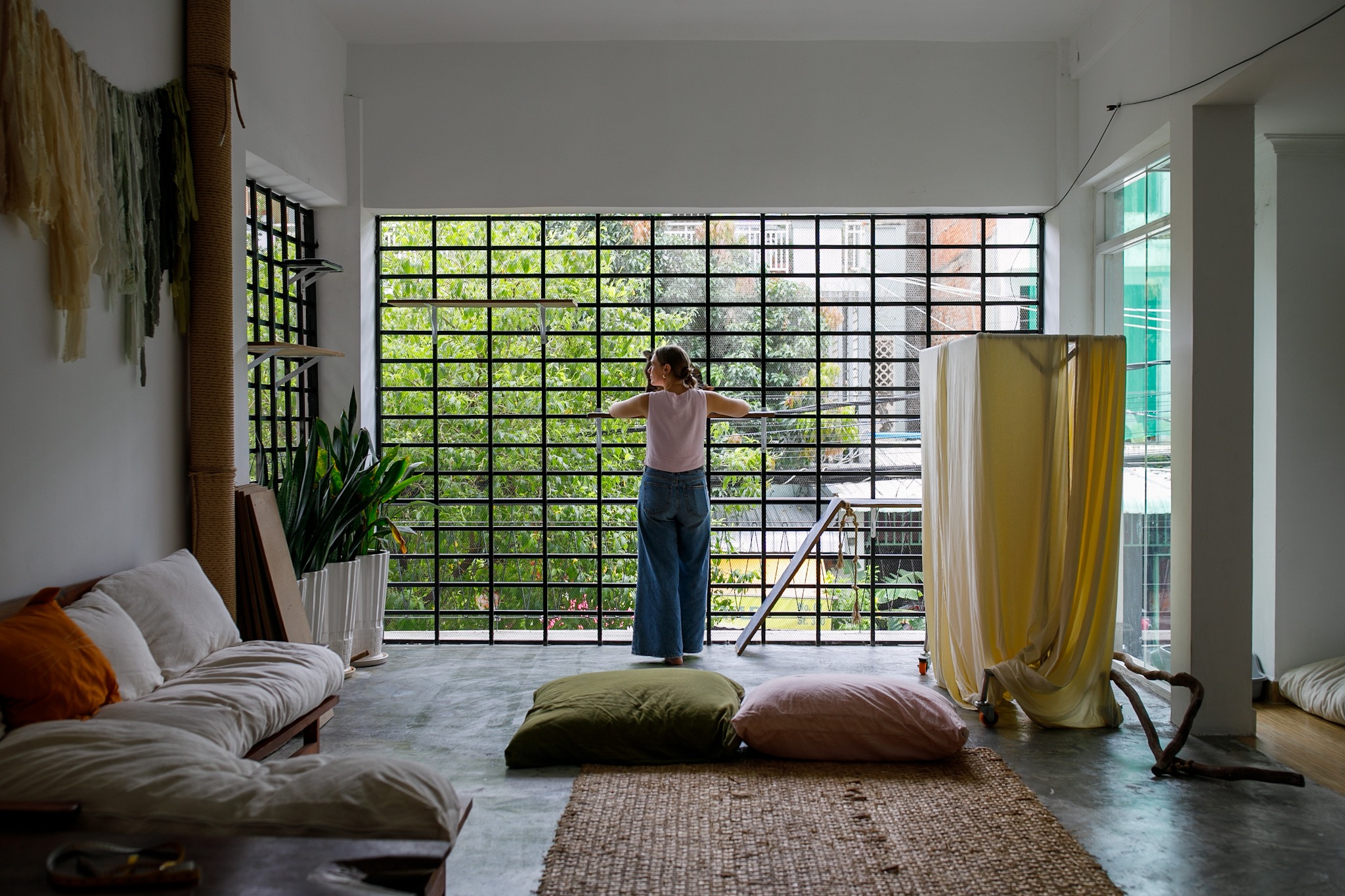
Interwoven workshop space
Interwoven’s workshop space, looking out toward the greenery beyond the atelier.
In conversation

Jess Kalisiak

Jess Kalisiak is the founder of INTERWOVEN Atelier, an independent Phnom Penh atelier creating slow garments from natural and reclaimed materials through close relationships with local makers. Interwoven opened in April 2024 and is based in BKK3.

@interwoven.atelier →
Words and photographs
Take / itonami
Next conversationWhat Makes a Place Possible?Hem Chansopheak / Story 002 →
Sontanea by itonami

If a story opens a question, a connection, or something you would like to build in Phnom Penh, talk to us.

Talk to itonami →