A conversation with Jason Slip about finding his way into images through music and street art, bringing his creative skills into a small coffee shop, and learning how to welcome people. At CPC in Phnom Penh, Myanmar coffee, bold design and everyday conversations are becoming part of the life he is building.
In conversation
Jason Slip
Work
Filmmaker CPC
Place
Phnom Penh
Reading time
About 15 minutes
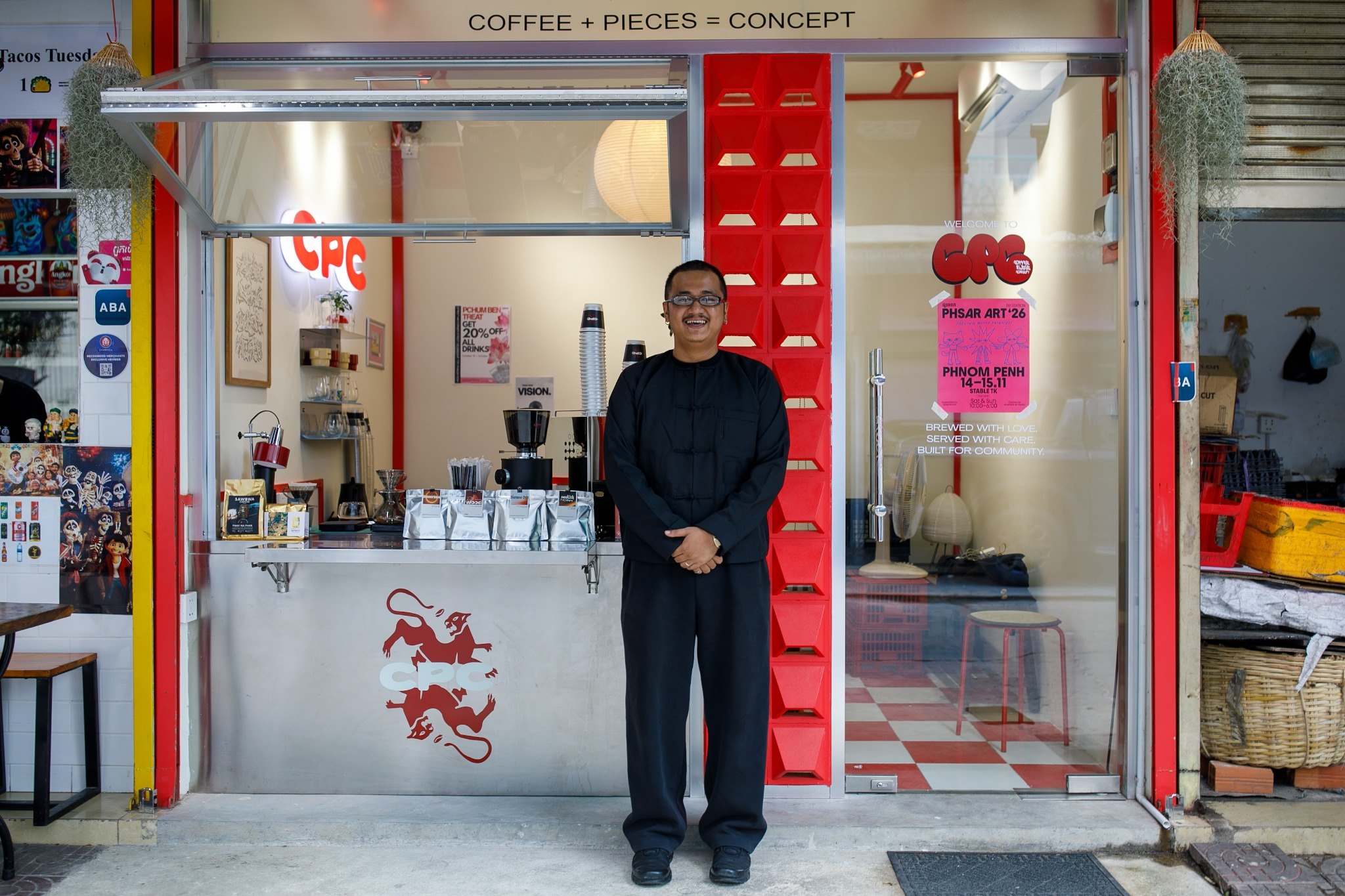
Jason Slip outside CPC in Phnom Penh.
Why I wanted to meet Jason
I met Jason Slip at itonami Night. He told me he had opened a coffee shop and invited me to visit. The following week, I stopped by CPC, expecting to enjoy a coffee and spend a little time together. The coffee was fruity and light. Then we started talking.
I learned that, long before opening this little shop, Jason had made a name for himself as a creative director in Myanmar. He had worked with hip-hop artists, made music videos and built an entertainment company. He began showing me his films. I watched, asked questions and kept wanting to hear more. What I had imagined as a short visit became a long conversation.
He spoke about what he and the artists around him had hoped to make possible for Myanmar’s younger generation. He also told me about work he had had to leave unfinished, difficult choices, and the journey that had brought him through Bangkok to Phnom Penh. Watching the work while hearing him talk about the life around it, I wanted to understand how he had found his way to this small coffee shop.
That was why I returned with my camera and recorder. We talked about the images and music that first caught his attention, the way he learned to work, and the everyday choices involved in making CPC a place of his own. He is still making films in Cambodia, including work for TEN11. He is also learning how to make a cup of coffee that someone wants to come back for, and how to welcome the next person through the door.
For the first time, a Sontanea story unfolds in two parts. This online conversation follows Jason’s creative work and the life he is building in Phnom Penh. Some of the experiences he shared could put him and his family at risk if published online. The second part, about his creative life in Myanmar and the years that followed, is available only as a printed reading copy inside CPC. We hope you’ll visit, enjoy a coffee and take some time to read it there.
Part Two. A printed conversation, only available to read inside CPC.
This conversation has been edited and condensed for clarity.
01 / What catches your eye
Take
For readers meeting you for the first time, could you introduce yourself and your work?
Jason
My name is Jason Slip. I’m a filmmaker. I mainly shoot music videos, fashion films and commercials, and sometimes documentaries. Lately, I’ve become more interested in documentary work. Music videos are my favourite because I love music.
Take
You said your love of music brought you into filmmaking. What first made you want to create images of your own?
Jason
When I was a kid, I listened to hip-hop, Eminem, 50 Cent and Timbaland. Then K-pop came to Myanmar through CDs and DVDs sold on the street. The cover art was amazing, so I bought one. When I played it, the videos felt like another universe. They were so colourful. The music made me want to dance. I loved dance and painting too.
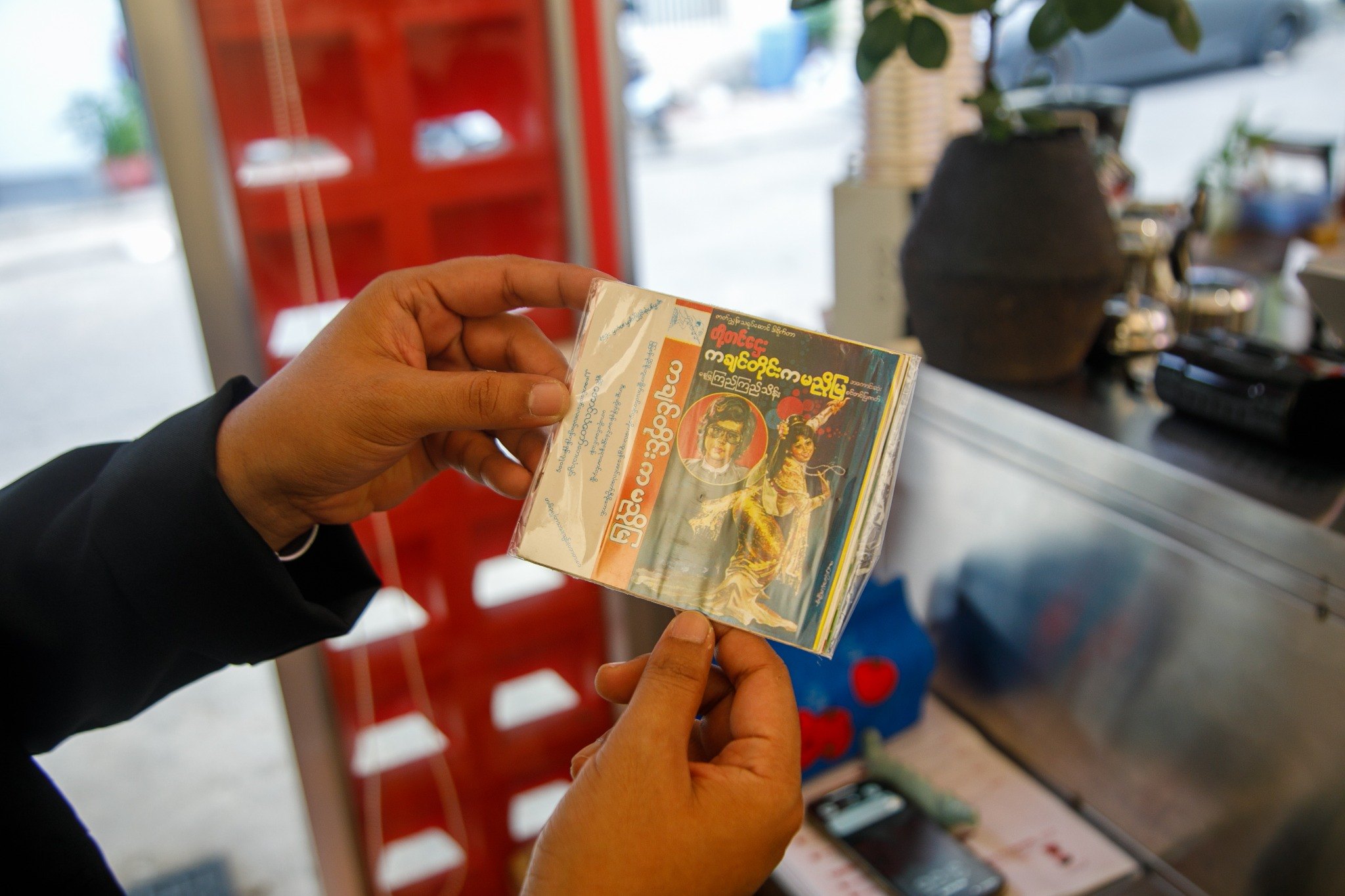
Jason showing me a cassette cover, one of the few keepsakes he brought with him from Myanmar.
But if I go back to what first drew me towards making images, I would say graffiti. My cousin and I were going to school when we saw a big piece in neon green on a damaged building. Everything around it was broken, but that one piece stood out. I didn’t know who had made it. I just thought, wow, what is this? It’s so cool.
The next day, we got off the bus and went to look at it. We even touched the wall. We asked older students about it, bought spray paint and tried it at home. Then my dad noticed. Why are you messing up my wall? We got in trouble!
At the time I didn’t know that hip-hop, dance and street art were connected. I just liked them. Later, when I searched for graffiti pictures online, sometimes landscape photographs or black-and-white street photographs appeared too. I thought, that’s amazing. I want to try.
I started taking photographs with a Samsung phone. I would go around the city, ride the train and get off at different stations to shoot. At internet cafés, I played with pictures and typography using online tools. Why couldn’t I take my own photograph and try different fonts with it? I was learning by playing.
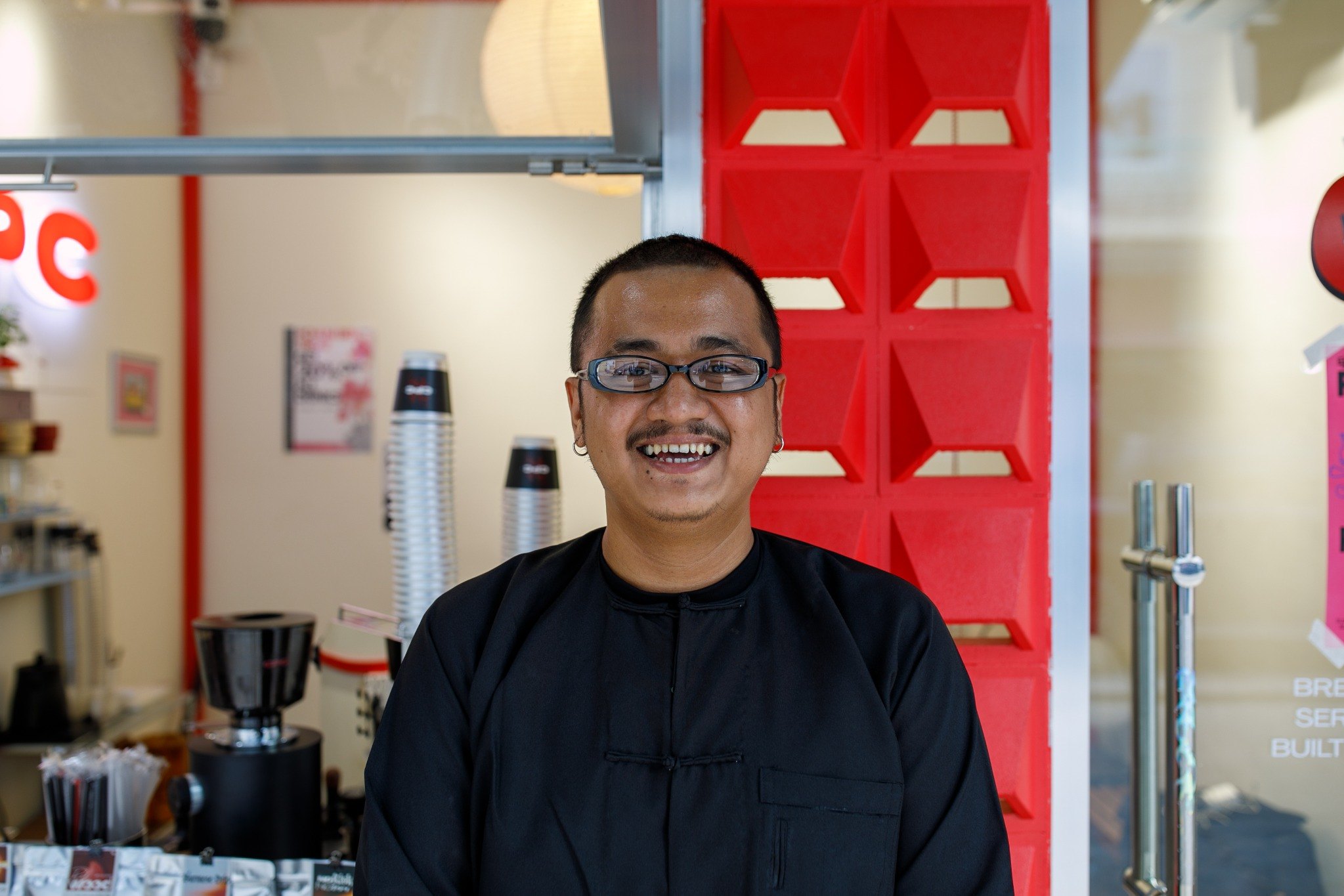
Jason during our conversation at CPC in local Burmese clothing.
02 / Everything can be art
Take
You also use the artist name TRASH ART. What does that name mean to you?
Jason
I wanted to make art, but I also had to work and earn money. There were many things I wanted to do, and I couldn’t focus on all of them at once.
One meaning of TRASH ART is that everything can be art. It depends on how you see something and how you present it. Even something someone thinks is trash can become art.
There is also a personal meaning. I grew up in a neighbourhood where a lot of rappers came from. I didn’t finish high school and I don’t have a degree. Sometimes I compared myself with friends who had more education. But I could still make things. I could still do the work. That is part of why I chose the name.
“Everything can be art.”
Jason and his favorite artwork on the wall at CPC
03 / The work behind the image
Take
You learned a lot by trying things yourself. Once that became professional work, what did you have to learn about working with other people?
Jason
Time. When I was younger, I didn’t know how to organise my time. In the beginning of my production work, I delivered projects late. Customers were angry, and I had to solve a lot of problems.
I learned from those experiences. Keeping a promise, respecting time and respecting the customer are important. Being on time is part of respecting another person.
I’m not saying I’m strict with everyone all the time. But as a professional, and as a person, respecting each other’s time matters.
“Time is the most important thing.”
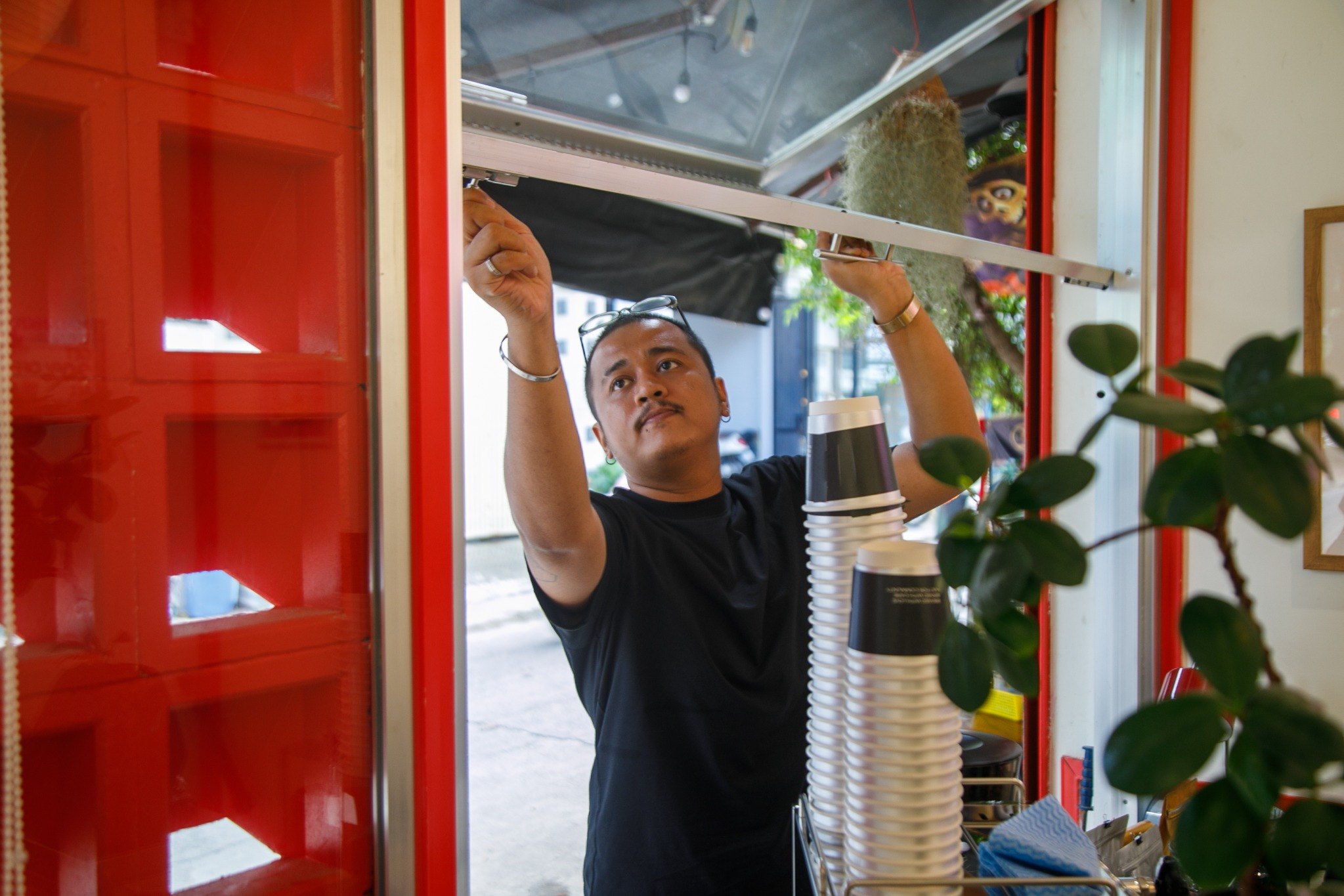
Jason opening the window of the shop.
Take
You now make films here in Cambodia too. How did your connection with TEN11 begin, and how did you develop the idea for that first project?
Jason
My wife met someone here who worked with TEN11. Later we met as a group, had a drink and introduced ourselves. He already knew my work from Myanmar, although we had never met in person.
He showed my portfolio to the company, and I got a chance to work on a TEN11 collection with Princess Jenna. That was my first project with them.
Before a shoot, I try to understand the person. With that project, I watched her videos and looked at her social media. I wanted to understand her character, her feeling and the way she interacted with people.
Then I made a mood board. I thought about the colours, the clothes, camera shots, lighting, location, colour grading, editing and background music. I wanted everything to work with that character.
I’ve also worked on a TEN11 and Hello Kitty collaboration. I edited that video, while someone else did the animation. Depending on a project and its budget, I rent the camera and equipment I need. I’m happy to explore different kinds of projects.
04 / Putting your heart into a place
Take
Alongside that film work, you’ve opened CPC. How did the idea for a shop become a real place?
Jason
My wife found this space on Facebook Marketplace. At first, we thought about selling interesting pieces, accessories, gifts from Myanmar and clothes from local brands.
She was the brave one. I was thinking about the money and worrying about losing it. She wanted to take the space. We had a discussion about it, and eventually I said, okay, let’s see what happens.
At the same time, I was involved in another small shop with a café. I was taking photographs, working on drinks and the menu, and learning from that experience. It was much farther away, and it was difficult to get people to come.
Here, I could see people passing, both local people and visitors. I thought about what I already knew. I could take photographs, make videos, design and do marketing. Why couldn’t I put those skills into this place?
We changed the idea towards drinks. People eat and drink every day. If I could make good coffee and give good service, I thought I could do it.
We also had to think about how to keep the business going, beyond simply opening the door. I wanted enough to cover six months, eight months or a year. We made a business plan, and two other people came in to support the shop as shareholders. It took more than the two of us to make it happen.
“I’m going to put all my heart in.”
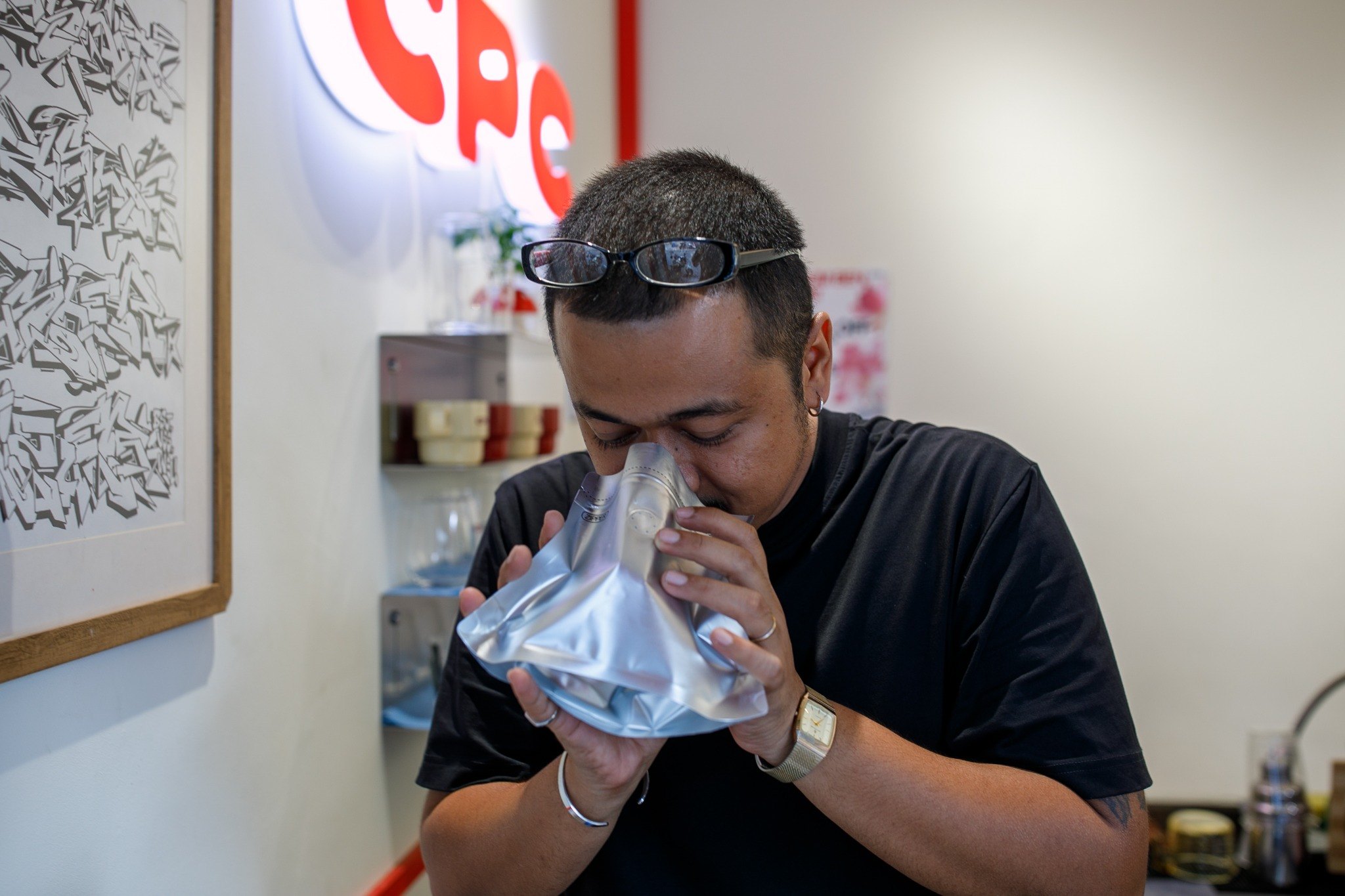
Jason checking the aroma of the beans.
Take
You brought your design skills into the shop too. What does CPC mean, and how did you want this place to feel?
Jason
Coffee plus pieces equals concept. The pieces are interesting things, accessories, lamps and decorations. The coffee and the pieces together become the concept.
I like short names. I’m straightforward, and I wanted the name to feel like my personality too.
For the interior, I like things clean and simple. I love brutalism. I wanted concrete throughout, but doing the whole place that way would have cost a lot, so I mixed things.
I used stainless steel and aluminium for a futuristic feeling. The red is bold. When people pass, it catches their attention. For me, the red also stands for bravery and taking a risk.
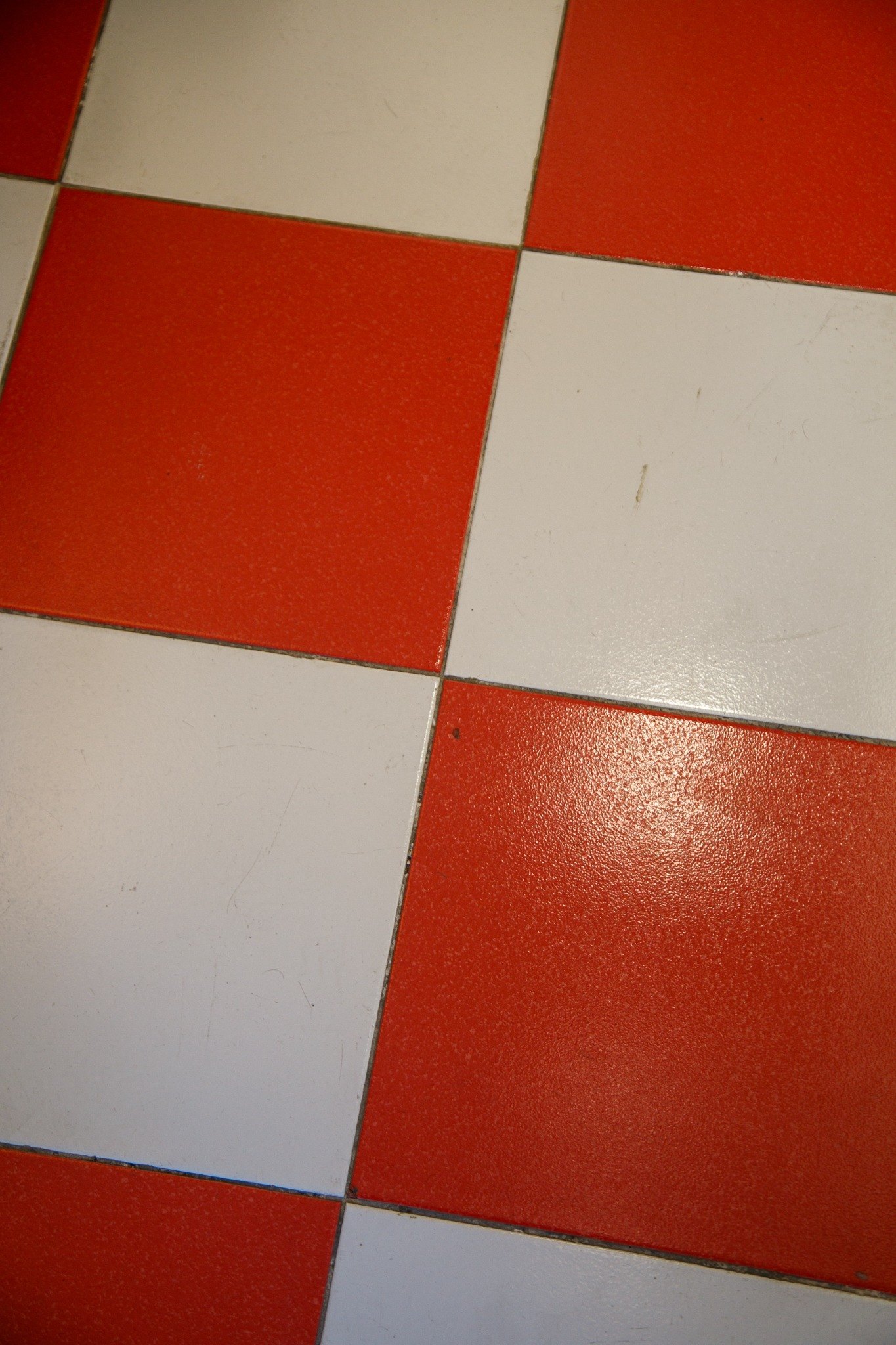
Red and white on the floor at CPC.
05 / Learning a cup at a time
Take
You knew how to make images and design a space, but coffee was something you had to learn. How did you begin?
Jason
I researched it myself. Nobody was teaching me in person. I watched YouTube, Instagram and TikTok, searching for the right way to learn. I wrote things down and ordered coffee. I visited coffee shops around Phnom Penh, then came home, tried things and smelled the coffee.
There was a period when I was mostly at home, in front of the computer, learning and researching. We were already renting this place, but it wasn’t open yet. We were paying rent every month while I was still working things out.
Take
Could you make us a cup? Tell me about the Myanmar beans you chose and the flavour you’re looking for.
Jason
The beans come from Shan State in Myanmar. I used to buy coffee from this supplier and brew it at home when I lived there. When I got the idea to open a shop here, I decided to use those beans again. I wanted to support Myanmar coffee too.
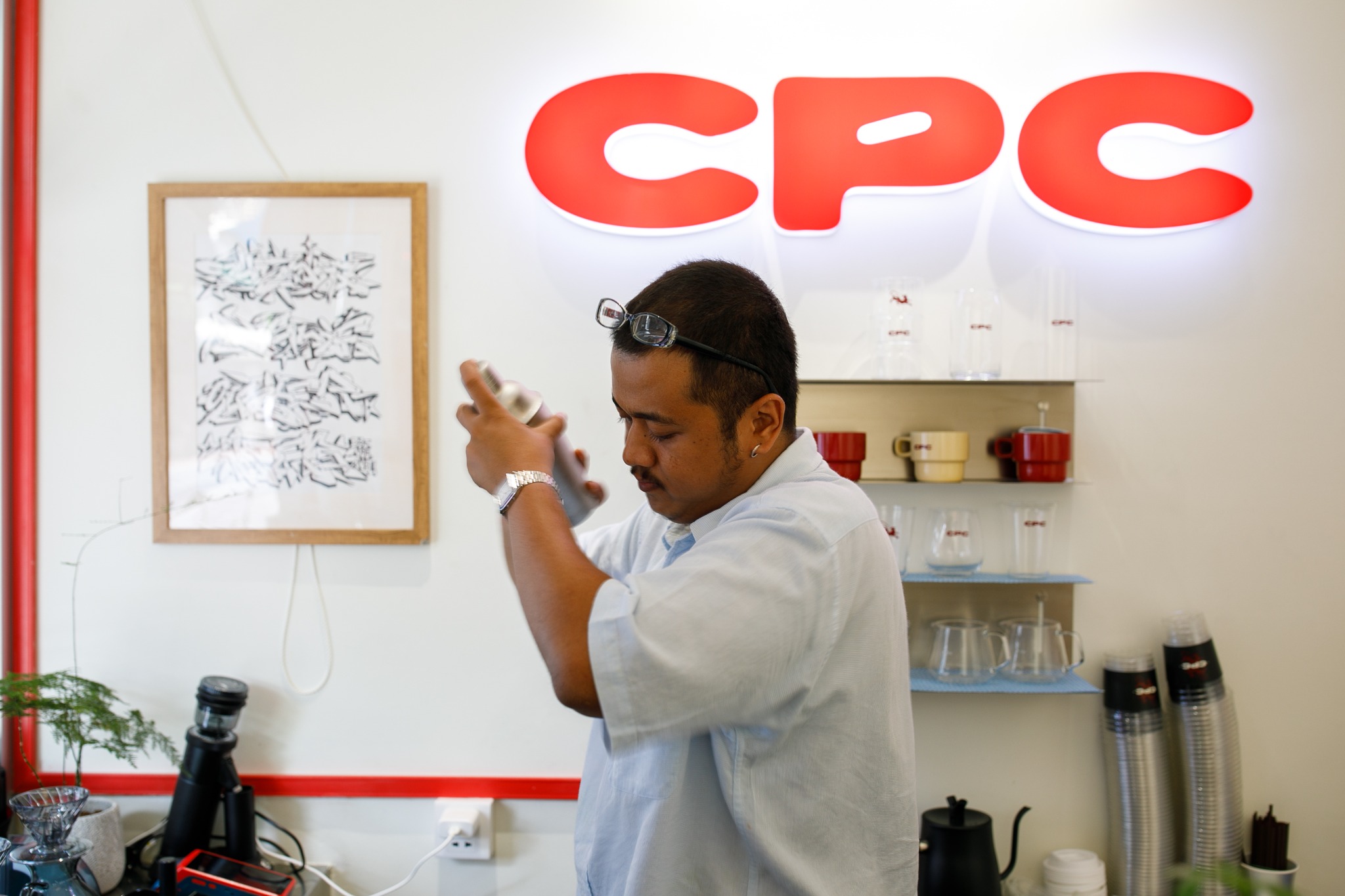
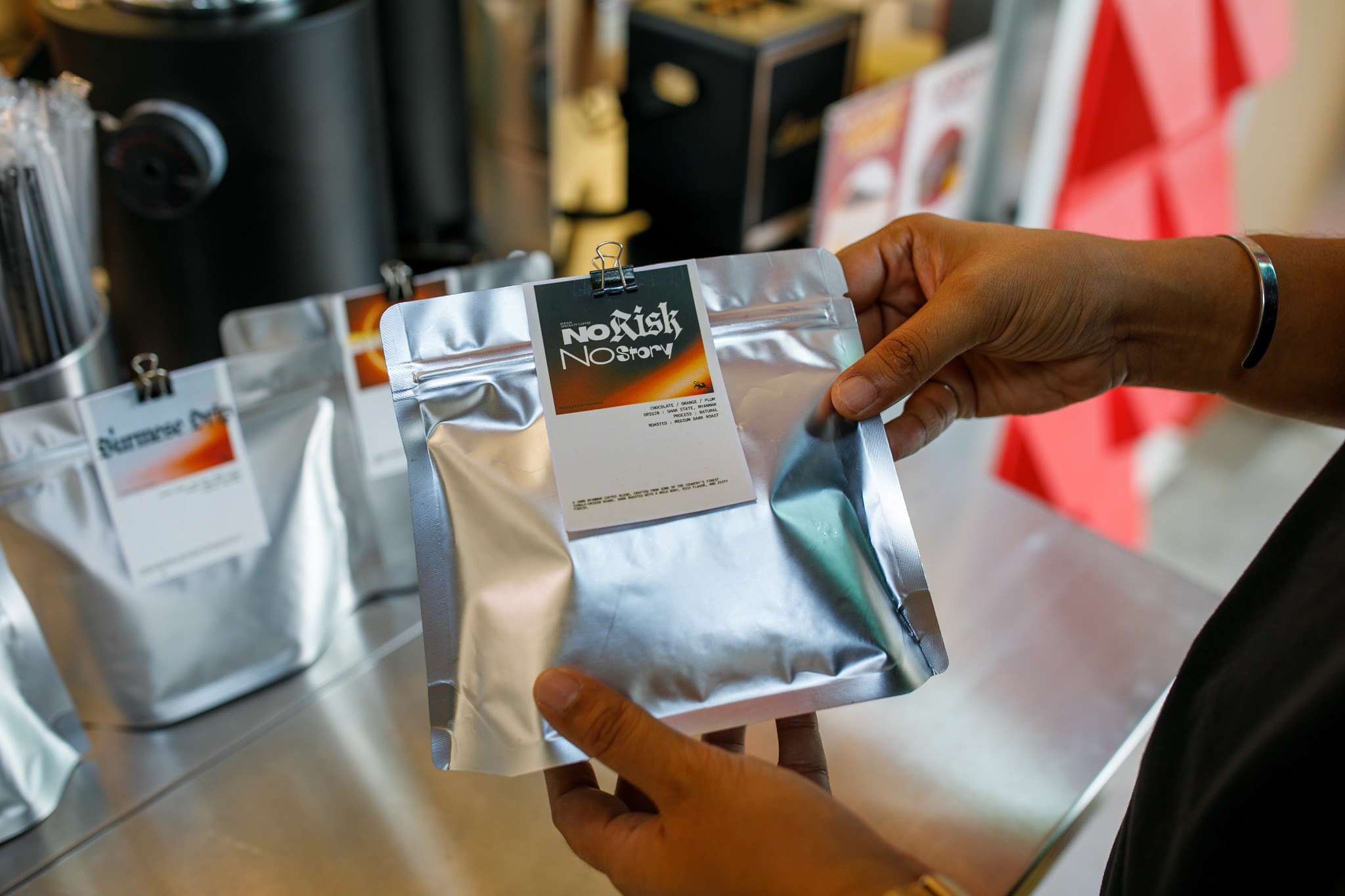
We have different coffees with different roasts and flavours. I give them names according to how I think about them. Sunrise is lighter, more floral and bright. Burmese Drip is darker and stronger. I add a little honey to that drink, so it has a sweet finish. No Risk No Story has a stronger flavour too.
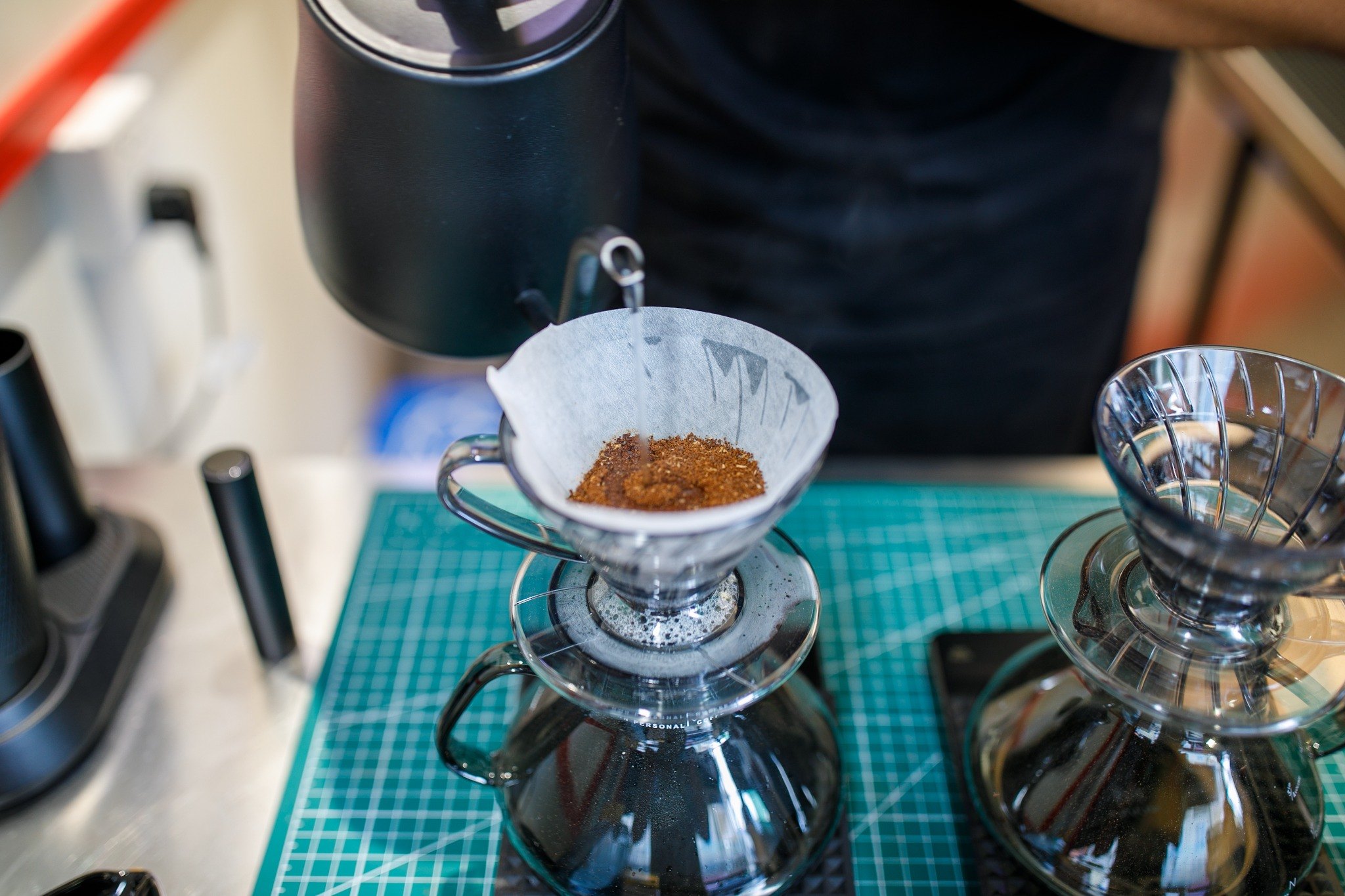
For this cup, I’m using Sunrise. First I weigh the beans, 18 grams, then grind them and put the coffee into the paper filter. The grind and the temperature of the water matter. I’m looking for a light, bright taste, different from the stronger extraction of an espresso machine.
The coffees Jason showed me during the visit.Pouring hot water through the coffee and paper filter.The finished coffee.
06 / Learning to welcome people
Take
Making the coffee is one part of it. What are you learning from serving people and running the shop every day?
Jason
How to make good coffee, so people want to come back. And how to serve people. The way you talk, the way you welcome someone, even when you’re tired and your social energy is gone. I’m still learning that.
Before, on a film set in Myanmar, I could sit at the monitor and ask an assistant to bring me coffee. Now I’m the one making and serving it. Everything has flipped! But even then, I ate with the lighting crew, sitting on the floor. I wanted to treat everyone the same.
One thing I love about opening the shop is hearing different people’s lifestyles and stories every day. Now I know a little about you and what you do. After you go, another person comes in, and I hear another story.
I’ve always been quite introverted. I like talking with people in person, but I don’t like showing off who I know on social media. I want to be kind to people and do my best.
Before opening, I thought, if I’m good at what I’m doing, if I’m nice to people and people love my coffee, I can make connections through that. I can communicate with people through the coffee.
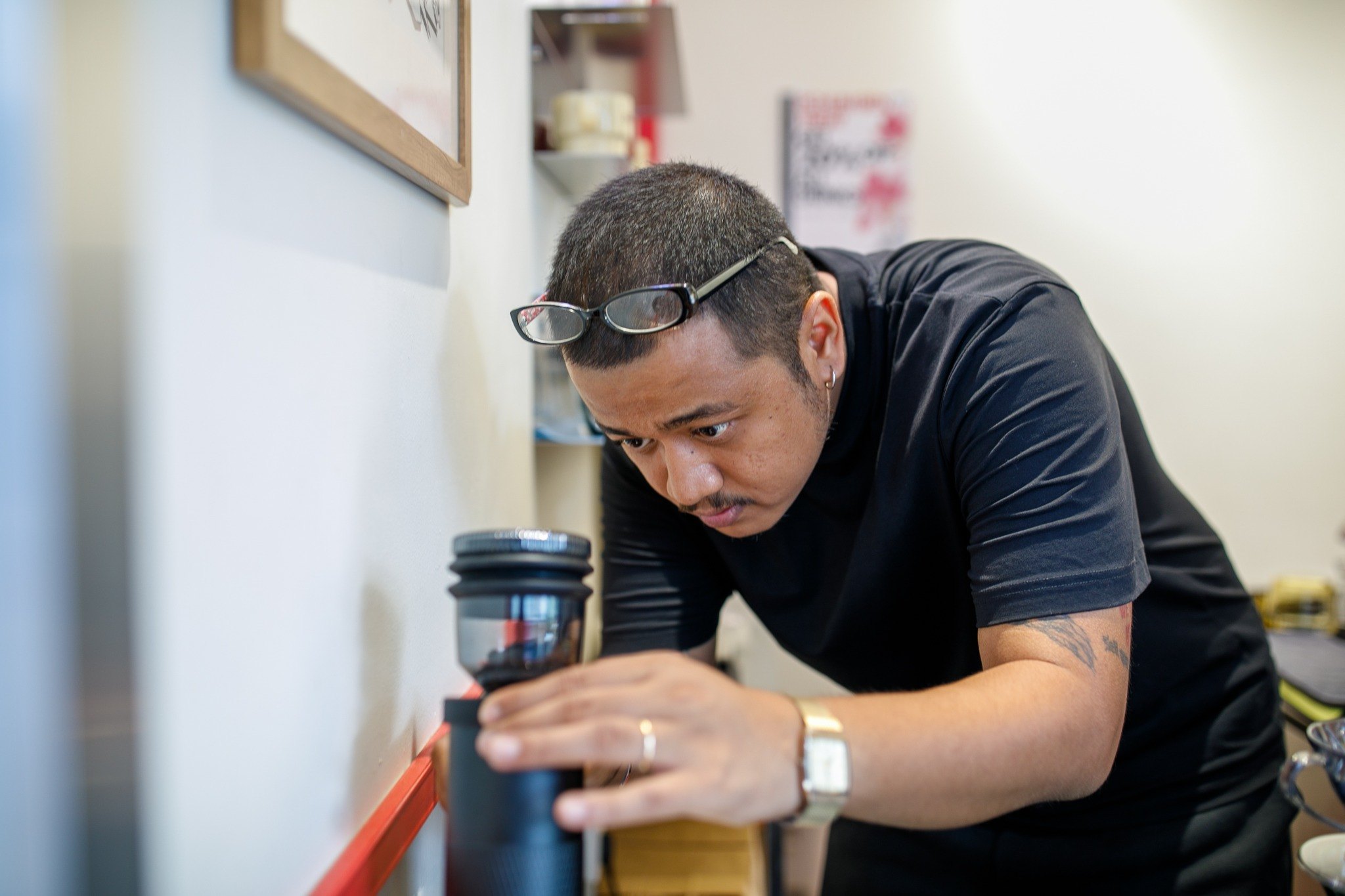
Jason working with the grinder.
07 / Seeing what this place can become
Take
You spoke about wanting people to connect through the shop. What would you like CPC to become, and how has Phnom Penh shaped that possibility?
Jason
I started CPC as a small place, but deep down, I’ve always hoped it could become something bigger than what it is today. I want to build a space that reflects my own journey, my ideas, and the things I believe in. Somewhere people can feel comfortable, connect with one another, and be inspired in their own little ways. I know it takes time to turn a dream into reality, but that’s what makes this journey meaningful to me.
Phnom Penh has played a big part in shaping this dream. Being here has allowed me to meet different people, experience new perspectives, and see so much potential in the city. It makes me want to keep learning, experimenting, and pushing myself to see what CPC can become. I don’t have everything figured out yet, but I hope that one day, when I look back, I can see how far this little place has come. More than just growing a business, I want to create something I’m genuinely proud of, a place that grows with me, gives back to the community, and makes people feel that they belong. For now, I’m taking it one step at a time and seeing where this dream takes me.
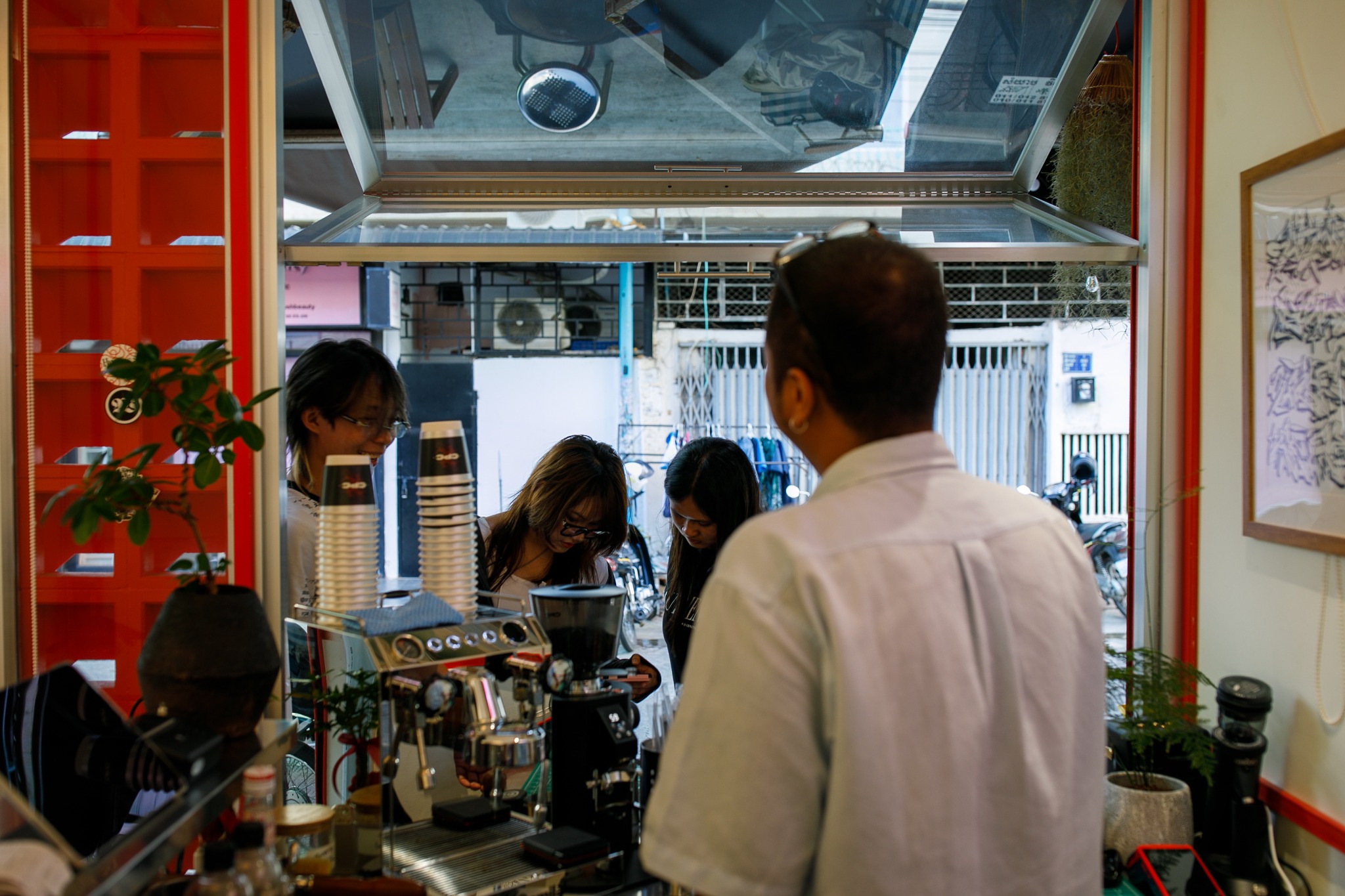
Jason welcoming the customers
After the conversation / Take
On my first visit, I had watched Jason’s films while he told me about the people and hopes behind them. When I returned for this conversation, I wanted to understand the person bringing all that experience into CPC. His interests in music, images and design are here too, in the red, the metal and the objects he has brought together.
What stayed with me was the everyday work inside this new place. Choosing a roast. Learning to keep a promise. Deciding how to welcome someone when your energy has run out. Jason was still discovering what it took to make people want to return, while keeping his creative work going.
There is more to the conversation that brought me back with my camera. In the second part, Jason speaks about his creative life in Myanmar, the future he and other artists had imagined, and the choices involved in leaving and beginning again. We are keeping that conversation offline out of care for him and his family.
The second part of this story is only available as a printed reading copy inside CPC. We hope you’ll visit, enjoy a coffee and spend some time with the conversation there. You may meet Jason too. What began for me as a visit for coffee left me wanting to listen for much longer.
Visit CPC, enjoy a coffee, and continue the conversation.
In conversation
Jason Slip
Jason Slip is a filmmaker from Myanmar working across music videos, fashion films and commercials. He also runs CPC in Phnom Penh.